




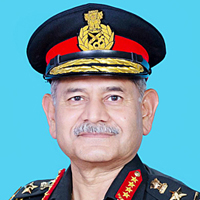
The insightful articles, inspiring narrations and analytical perspectives presented by the Editorial Team, establish an alluring connect with the reader. My compliments and best wishes to SP Guide Publications.
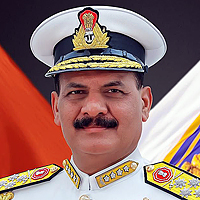
"Over the past 60 years, the growth of SP Guide Publications has mirrored the rising stature of Indian Navy. Its well-researched and informative magazines on Defence and Aerospace sector have served to shape an educated opinion of our military personnel, policy makers and the public alike. I wish SP's Publication team continued success, fair winds and following seas in all future endeavour!"

Since, its inception in 1964, SP Guide Publications has consistently demonstrated commitment to high-quality journalism in the aerospace and defence sectors, earning a well-deserved reputation as Asia's largest media house in this domain. I wish SP Guide Publications continued success in its pursuit of excellence.
SEMINAR REPORT / SAMUDRA UTKARSH
Defence Minister Rajnath Singh urged global partners to collaborate with India’s growing shipbuilding industry to co-develop next-generation maritime capabilities.
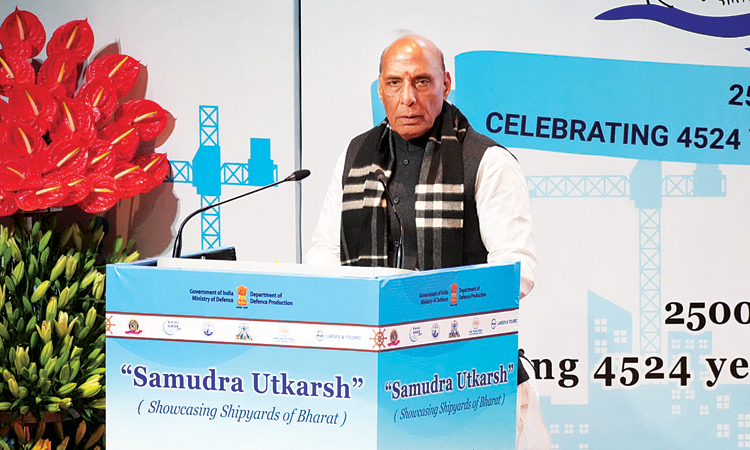
Calling India a “Vibrant, capable and future-ready maritime power,” Defence Minister Rajnath Singh today urged global partners to collaborate with India’s growing shipbuilding industry to co-develop nextgeneration maritime capabilities.
Speaking at Samudra Utkarsh, a seminar organised by the Department of Defence Production, Ministry of Defence, to showcase the strength of Indian shipyards, the Defence Minister said such partnerships could create sustainable technologies, resilient supply chains, and a secure maritime future for the world.
Rajnath Singh emphasised that India’s shipbuilding ecosystem–powered by public sector shipyards, dynamic private companies, and thousands of MSMEs–has evolved into an integrated, end-to-end value chain capable of designing, constructing, outfitting, refitting, repairing and supporting vessels across their entire lifecycle. “India today builds not just ships, but trust. Not only platforms, but partnerships,” he said.
Highlighting flagship achievements such as the indigenous aircraft carrier INS Vikrant, Kalvari-class submarines, stealth frigates and destroyers, Rajnath Singh said India’s shipyards have demonstrated technological maturity, sophisticated automation, and world-class systems integration.
Indian Navy today has 262 ongoing indigenous design and development projects, many in advanced stages. Some shipyards are on track to achieve 100 per cent indigenous content.
He noted that Indian shipyards are rapidly emerging as global players in the commercial and dual-use maritime sector as well. These include high-end passenger vessels, research ships, pollution-control vessels, coastal ferries, and even the world’s most advanced deep-sea mining support vessel, developed for ISRO and the National Institute of Ocean Technology.
The Defence Minister emphasised on the private sector for its expanding role, from building green-fuel and LNG vessels to manufacturing roll-on/roll-off ships and other high-efficiency platforms for domestic and international clients.
“Our shipyards are capable of delivering everything from aircraft carriers to advanced research vessels and energyefficient commercial ships. This positions India strongly to become a global hub for shipbuilding, ship repair, and maritime innovation in the coming decade,” he said.
Rajnath Singh underscored that every ship of the Indian Navy and Coast Guard currently under construction is being built in India. Policy reforms such as the Maritime India Vision 2030, Maritime Amrit Kaal Vision 2047, Defence Production & Export Promotion Policy, and Defence Procurement Manual 2025 have propelled this transformation, he said.
The Indian Navy today has 262 ongoing indigenous design and development projects, many in advanced stages. Some shipyards, are on track to achieve 100 per cent indigenous content within the decade, reducing dependence on global supply chains and ensuring uninterrupted production.
Positioning Indian shipyards as key drivers of the country’s emerging Blue Economy, Rajnath Singh said they are building vessels critical for marine research, environmental monitoring, fisheries management and maritime law enforcement across India’s vast coastline and Exclusive Economic Zone.
India’s shipbuilding ecosystem has evolved into an integrated, end-to-end value chain capable of designing, constructing, outfitting, refitting, repairing and supporting vessels across their entire lifecycle
He highlighted the sector’s shift toward sustainable and climate-resilient practices, including green technologies, hybrid propulsion and digital shipyard systems.
Defence Minister also pointed to the rising number of foreign ships visiting Indian shipyards for complex refits as a strong endorsement of India’s reliability, capability and cost-effectiveness. “We aim to become the preferred sustainment and repair hub for the entire Indo-Pacific region,” he said.
The seminar’s theme– “2500 BCE – 2025 CE: Celebrating 4,524 Years of Shipbuilding Excellence”–reflects India’s long maritime heritage. From the dockyards of ancient Lothal to modern shipyards in Mumbai, Goa, Visakhapatnam, Kolkata and Kochi, India’s maritime journey continues to evolve, he added.
Secretary (Defence Production) Sanjeev Kumar described India’s shipyards as “pillars of industrial strength and self-reliance,” having transformed over the last decade through digital tools, automation and best global practices. India, he said, now offers an ideal mix of capability, quality and geographic advantage for both defence and commercial shipping.
Manish Kumar Jha is a Consulting & Contributing Editor for SP’s Aviation, SP’s Land Forces and SP’s Naval Forces and a security expert. He writes on national security, military technology, strategic affairs & policies.