




The insightful articles, inspiring narrations and analytical perspectives presented by the Editorial Team, establish an alluring connect with the reader. My compliments and best wishes to SP Guide Publications.

"Over the past 60 years, the growth of SP Guide Publications has mirrored the rising stature of Indian Navy. Its well-researched and informative magazines on Defence and Aerospace sector have served to shape an educated opinion of our military personnel, policy makers and the public alike. I wish SP's Publication team continued success, fair winds and following seas in all future endeavour!"

Since, its inception in 1964, SP Guide Publications has consistently demonstrated commitment to high-quality journalism in the aerospace and defence sectors, earning a well-deserved reputation as Asia's largest media house in this domain. I wish SP Guide Publications continued success in its pursuit of excellence.
AMPHIBIOUS PROGRAMMES
The Indian Navy’s amphibious capabilities are undergoing a significant transition as it moves to a strategic bluewater expeditionary fleet to counter the growing presence of the Chinese People’s Liberation Army Navy (PLAN) in the Indian Ocean
The Indian Navy’s Amphibious capabilities are undergoing a significant transition. While its current operational fleet has declined due to the decommissioning of older vessels, the service is executing massive modernisation plans worth billions to project power across the Indo-Pacific region.
In October 2025, the Defence Acquisition Council (DAC), chaired by Defence Minister Rajnath Singh granted Acceptance of Necessity (AoN) for procurement of Landing Platform Docks (LPD), 30mm Naval Surface Guns (NSG), Advanced Light Weight Torpedoes (ALWT), Electro Optical Infra-Red Search and Track System and Smart Ammunition for 76mm Super Rapid Gun Mount for the India Navy.
The Navy’s requirement for LPDs was long known, with a Request for Information (RFI) floated in 2021, calling for four 200-meter-long vessels with electric propulsion and the capacity to embark 900 troops. The RFI required the LPDs to have a through deck capable of accommodating helicopters of various types, making the ship a Landing Helicopter Dock (LHD) rather than an LPD. The ship was also required to be armed, with 16 anti-ship missiles and 32 Vertical Launch Short Range Surface-to-Air Missile (VLSRSAM).
According to news reports of September 23, 2026, the Indian Navy has issued a RFI for procuring six Landing Craft Utility (LCU) MK-V vessels under the ‘Make in India’ initiative, signalling a major push towards strengthening the country’s amphibious warfare, logistics support and Humanitarian Assistance and Disaster Relief (HADR) capabilities. The proposed vessels are expected to significantly enhance the Navy’s ability to transport troops, heavy equipment and military vehicles across India’s vast maritime theatre, particularly in the strategically important Indian Ocean Region.
The RFI has been issued to Indian shipyards to promote indigenous shipbuilding and increasing domestic participation in the naval modernisation programmes. The procurement is planned under the Buy (Indian-IDDM) category, which places a strong emphasis on indigenous design, development and manufacturing. Shipyards responding to the RFI are required to provide details regarding indigenous content and domestic industrial participation.
According to the naval requirements outlined in the RFI, each LCU MK-V vessel will have an overall length of approximately 85 metres and a displacement of around 1,500 tonnes, with an allowable variation of 15 per cent. These specifications indicate a substantially larger platform than the Navy’s existing LCU MK-IV vessels, enabling greater payload capacity and extended operational reach. The vessels are to be powered by diesel propulsion systems and will be required to achieve a maximum speed of at least 15 knots. While speed remains important for tactical mobility, the greater emphasis appears to be on endurance and payload capacity, allowing the platforms to sustain operations over extended distances across the IOR.
The key requirement of endurance of approximately 4,500 nautical miles represents a major increase over the endurance available on the existing MK-IV class, providing the Navy with a much greater ability to support long-range deployments, distant island territories and prolonged maritime operations without frequent replenishment. The vessels are expected to operate effectively in Sea State 3 conditions while retaining survivability up to Sea State 7, highlighting the Navy’s intention to ensure that the platforms remain capable of functioning across a wide spectrum of maritime environments, including adverse weather conditions in during monsoons and open-ocean operations.
This ship-to-shore capability remains one of the most critical requirements for amphibious warfare, allowing armed forces to rapidly establish a presence in coastal areas and island territories when required
Each LCU MK-V will be designed with a planned service life of 30 years. For amphibious missions, the platform will be capable of carrying at least four Main Battle Tanks (MBTs), four BMPs and 190 fully equipped troops. This combination of armour, mechanised infantry and personnel transport capability provides considerable operational flexibility during expeditionary operations, island reinforcement missions and rapid military deployments. This ship-to-shore capability remains one of the most critical requirements for amphibious warfare, allowing armed forces to rapidly establish a presence in coastal areas and island territories when required.
Beyond traditional military roles, the new LCUs will also perform logistics support missions to India’s island territories. This function has become increasingly important given the strategic significance of the Andaman and Nicobar Islands and other remote locations that require regular transportation of personnel, supplies, vehicles and engineering equipment. The platforms will also support Exclusive Economic Zone (EEZ) patrol duties. This means the vessels can contribute to maritime domain awareness, coastal security operations and the protection of India’s maritime interests across vast stretches of sea. Search and Rescue (SAR) missions and Humanitarian Assistance and Disaster Relief (HADR) remain another major driver behind the requirement. India’s growing role as a regional security provider has led to increasing deployments of naval assets for disaster response across the IOR.
The ability to transport large quantities of relief supplies, engineering equipment, medical teams and emergency personnel can prove invaluable following cyclones, tsunamis, floods and other natural disasters. The requirement also reflects changing strategic realities in the Indian Ocean Region. India’s island territories occupy critical positions near major international shipping routes, and the Navy requires robust sealift capabilities to rapidly reinforce these locations whenever necessary. Larger and more capable landing craft can help maintain operational readiness across dispersed maritime assets.
The Indian Navy currently maintains a sealift and beaching capability split between a flagship dock, conventional landing ships, and smaller utility craft: INS Jalashwa (LPD) features a floodable well deck capable of launching mechanised landing craft (LCMs), has a flight deck that operates up to six medium helicopters, and can embark over 1,000 troops along with full armour squadrons; four indigenous Shardul-class Landing Ship Tanks (LSTs) and the older Magar-class ship (INS Gharial) primarily designed for direct beaching operations to deploy tanks, armoured vehicles, and troops; eight indigenous Mk IV class Landing Craft Utility (LCUs) stationed primarily under the Andaman and Nicobar Command - these 830-tonne vessels transport up to 160 troops and MBTs for quickreaction beaching and island security.
With the four next-generation LPDs planned to be procured for the Indian Navy, costing ₹80,000 crore, India is moving from a tactical beaching force to a strategic blue-water expeditionary fleet to counter the growing presence of the Chinese People’s Liberation Army Navy (PLAN) in the Indian Ocean. Moving past the original 20,000-tonne proposals, these next-gen warships will feature a displacement of over 32,000 tonnes each. They are expected to be powered by Integrated Full Electric Propulsion (IFEP) systems and will carry robust defensive/offensive armaments, including 32 VL-SRSAM) and 16 Surface-to-Surface Missiles (SSM). They will be equipped to operate fixed-wing naval drones, collaborative combat aircraft, and unmanned underwater vehicles (UUVs).
The next-generation LPD programme entered technical evaluation in 2026, with leading domestic shipyards like Mazagon Dock Shipbuilders Limited (MDL), Cochin Shipyard Limited (CSL) and Larsen and Toubro (L&T) positioned as the key contenders to build them indigenously. The Navy’s RFI to procure six additional larger Landing Craft Utility (LCUs) displacing around 1,500-tonnes will be near double the size of current LCUs, capable of carrying 4 MBTs tanks and maintaining an endurance of 4,500 nautical miles.
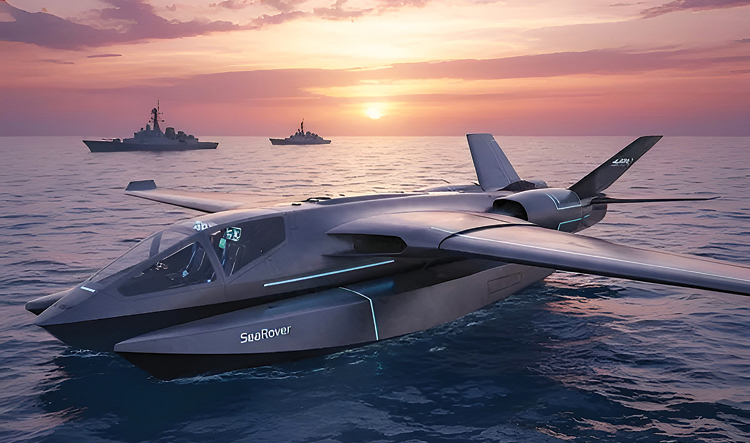
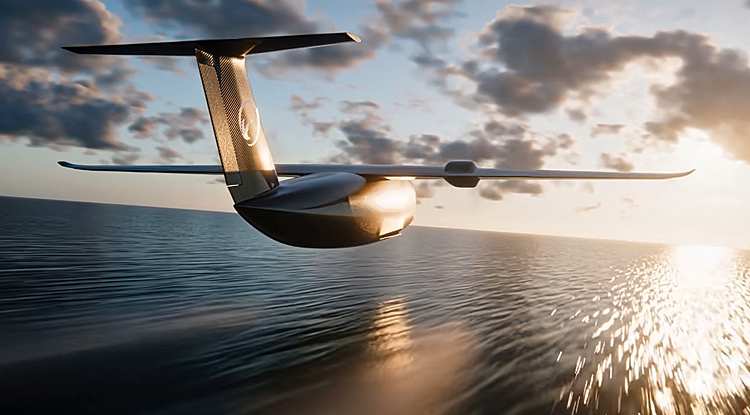
Plans are also moving forward to acquire six high-speed landing craft (285 tonnes) to facilitate rapid-assault special operations. To bolster coastal security, search-and-rescue, and island logistics, the Navy has issued an RFI to wet-lease four amphibious aircraft capable of land and water take-offs. Concurrently, India is advancing indigenous amphibious aircraft capabilities: Hindustan Aeronautics Limited (HAL) is developing amphibious version of the Dornier 228; Bengaluru-based Aspera Industries is designing an autonomous amphibious cargo aircraft named ‘Eureka’, built for a 1,000-kg cargo capacity with a 2,000-km range utilising existing waterways as runways. Bengaluru-based AlphaX Aerospace is working on the ‘SeaRover’ amphibious hybrid aircraft for dual civilian and defence roles.