





The insightful articles, inspiring narrations and analytical perspectives presented by the Editorial Team, establish an alluring connect with the reader. My compliments and best wishes to SP Guide Publications.

"Over the past 60 years, the growth of SP Guide Publications has mirrored the rising stature of Indian Navy. Its well-researched and informative magazines on Defence and Aerospace sector have served to shape an educated opinion of our military personnel, policy makers and the public alike. I wish SP's Publication team continued success, fair winds and following seas in all future endeavour!"

Since, its inception in 1964, SP Guide Publications has consistently demonstrated commitment to high-quality journalism in the aerospace and defence sectors, earning a well-deserved reputation as Asia's largest media house in this domain. I wish SP Guide Publications continued success in its pursuit of excellence.
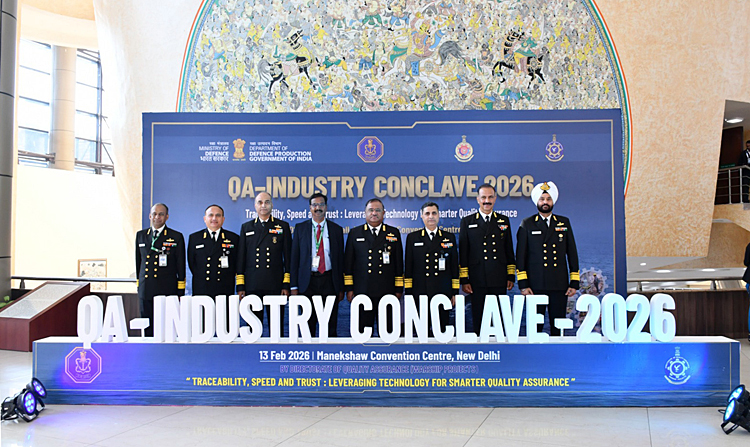
The Quality Assurance (QA)-Industry Conclave themed 'Traceability, Speed and Trust – Leveraging Technology for Smarter Quality Assurance' took place in New Delhi on February 13, 2026. It brought together senior leadership from the Ministry of Defence, Indian Navy, QA organisations, defence shipyards, public sector undertakings and leading private industry partners on a single platform to deliberate upon the future roadmap for a technology-driven quality assurance ecosystem.
The conclave underscored the transformative role of digital technologies in redefining quality assurance processes across the defence manufacturing value chain. Deliberations focused on enabling end-to-end traceability, reducing procedural timelines, enhancing transparency in inspection and certification, and creating a responsive framework that promotes trust between Quality Assurance agencies and industry. The discussions reflected a clear consensus that the integration of digital tools, data-centric methodologies and collaborative policy frameworks is essential for achieving speed, accuracy, and reliability in complex shipbuilding and defence production programmes.
A major outcome of the event was the release of the Indian Naval & Marine Industry – A Capability Catalogue, a comprehensive compendium aimed at providing structured visibility to indigenous industrial capabilities and facilitating stronger engagement between the Services & the domestic manufacturing ecosystem. The promulgation of the Joint Service Guidelines on the Common Information Model for integrated data management of combat systems and sensors marked a significant milestone towards standardisation, interoperability & seamless digital exchange of technical and quality data across stakeholders. The conferment of Green Channel Status and grant of Self-Certification to eligible industry partners in recognition of their proven quality performance reflected a progressive shift towards a trust-based, performance-oriented quality assurance regime that rewards consistency, reliability, and process maturity.
The technical sessions witnessed in-depth and forward-looking discussions on digital QA for shipbuilding, policy compliance in a rapidly evolving industrial landscape, and quality assurance challenges in naval ship construction and replenishment orders for spares. The participants shared practical experiences, best practices and emerging requirements, leading to a rich exchange of ideas and identification of actionable pathways for process optimisation. The deliberations brought out the need for real-time data visibility, integrated inspection planning, harmonised documentation, risk-based certification models and enhanced industry participation in quality planning from the design stage onwards.
The addresses by Chief of Material of the Indian Navy Vice Admiral B. Sivakumar and other senior dignitaries highlighted the evolving nature of defence manufacturing in India and the need for quality assurance systems to keep pace with technological advancements, modular construction practices, integrated combat systems and network-centric operations. The speakers emphasised that quality assurance is no longer a terminal activity, but a continuous, technology-enabled process embedded across design, production, testing and lifecycle support. The importance of aligning QA procedures with the national vision of Atmanirbhar Bharat and fostering a trust-based compliance environment for capable industry partners was also brought out prominently.