





The insightful articles, inspiring narrations and analytical perspectives presented by the Editorial Team, establish an alluring connect with the reader. My compliments and best wishes to SP Guide Publications.
"Over the past 60 years, the growth of SP Guide Publications has mirrored the rising stature of Indian Navy. Its well-researched and informative magazines on Defence and Aerospace sector have served to shape an educated opinion of our military personnel, policy makers and the public alike. I wish SP's Publication team continued success, fair winds and following seas in all future endeavour!"

Since, its inception in 1964, SP Guide Publications has consistently demonstrated commitment to high-quality journalism in the aerospace and defence sectors, earning a well-deserved reputation as Asia's largest media house in this domain. I wish SP Guide Publications continued success in its pursuit of excellence.
Germany's Ambassador's statement signals faster approval of Project-75(I), which is awaiting final approvals from India. While approved by both governments, the submarine programme is already delayed by a few years.
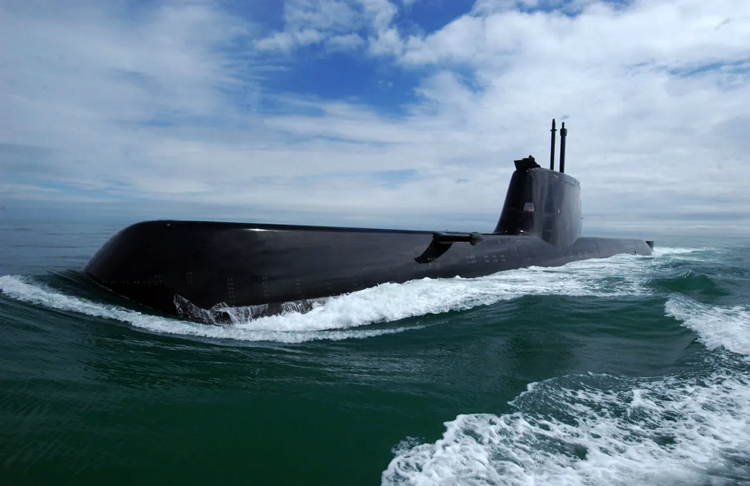
Germany is ready to sign the proposed submarine partnership with India as soon as New Delhi completes the required approvals, German Ambassador to India Jasper Wieck has said, signalling that the long-awaited Project 75(I) programme is moving towards its final stage.
Wieck said Germany had completed the necessary documentation and was prepared to proceed with the agreement, estimated to be worth around $8 billion, or ₹70,000–90,000 crore. The deal is now awaiting final approvals from the Indian side.
The proposed programme is significant because Berlin and India look at it as a technology partnership rather than a straightforward sale of submarines
"Germany stands ready to sign at any moment as soon as the Indian side is ready," the German envoy said. "We are waiting for the final approval from the various authorities from the Indian side, and then we can kickstart this very important partnership."
The proposed programme is significant because Berlin and India look at it as a technology partnership rather than a straightforward sale of submarines. German defence major Thyssenkrupp Marine Systems (TKMS) is expected to focus on building the submarines in India and transferring technology to Indian industry.
Project-75(I), under the strategic partnership (SP) model, calls for the construction of six conventional submarines with advanced capabilities, including air-independent propulsion (AIP) system
Under the proposed arrangement, TKMS will partner with state-owned Mazagon Dock Shipbuilders Limited (MDL) to manufacture the submarines in Mumbai. The partnership is based on the modified Type 214 NG configuration, with a displacement of 3,000 tonnes (Approximately). The partnership is expected to strengthen India's domestic capability in submarine construction, systems integration and long-term maintenance.
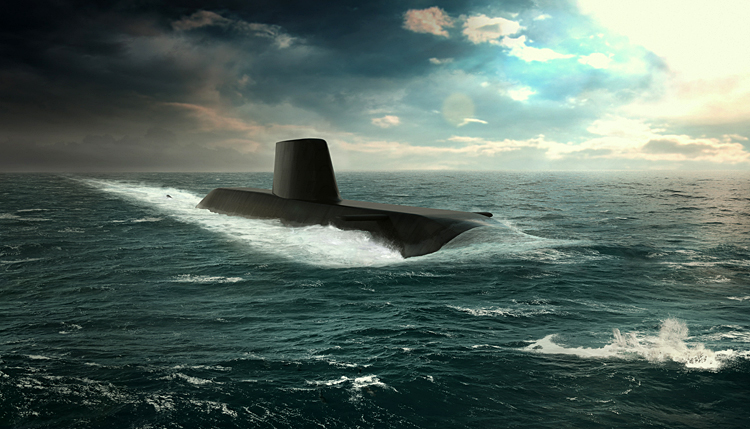
Project-75(I), under the strategic partnership (SP) model, calls for the construction of six conventional submarines with advanced capabilities, including air-independent propulsion (AIP) system. P-75(I) was conceptualised as the next phase of Project-75 (which produced the six Kalvari-class Scorpène submarines).
The key element of AIP systems is all about enhancing a submarine's submersible capability up to 15 days, as per the average estimation which is otherwise just 48 hours without AIP. In a nutshell, it raises its stealth profile and endurance.
The programme has been closely watched because it is intended to strengthen the Indian Navy's underwater warfare capability while expanding indigenous shipbuilding
As per the SP model, all six submarines will be built in India, with indigenous content rising gradually from 45 per cent to 60 per cent. The programme has been closely watched because it is intended to strengthen the Indian Navy's underwater warfare capability while expanding indigenous shipbuilding.
For India, the importance of the agreement extends beyond acquiring six submarines. The technology-transfer component and domestic production are central to India's broader objective of reducing dependence on foreign suppliers and creating an industrial base for complex naval platforms.
For Germany, the project would mark a major expansion of defence-industrial cooperation with India and provide TKMS with a long-term security partnership in one of the world's largest naval markets.
For the Indian Navy, the programme is also closely linked to the larger challenge of maintaining an adequate and technologically capable submarine fleet in the Indian Ocean region
The immediate focus, however, remains on completing India's internal approval process which has several layers. Once those clearances are secured, Germany has indicated that it is ready to move quickly towards signing and launching the partnership.
The next phase will determine whether Project-75(I) can move from a prolonged procurement process to actual construction in Indian shipyards.
For the Indian Navy, the programme is also closely linked to the larger challenge of maintaining an adequate and technologically capable submarine fleet in the Indian Ocean region.
It seems more urgent in the wake of Pakistan's new submarine acquisition, a $4 to $5 billion agreement with China to procure eight Hangor-class attack submarines. Derived from China's Type 039A/B Yuan-class, these vessels represent the largest single defence export contract in Chinese history and drastically upgrade Pakistan's sub-surface fleet.
Manish Kumar Jha is a Consulting & Contributing Editor for SP's Aviation, SP's Land Forces and SP's Naval Forces and a security expert. He writes on national security, military technology, strategic affairs & policies.