



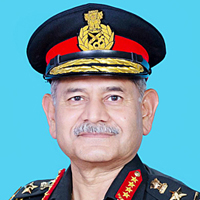
The insightful articles, inspiring narrations and analytical perspectives presented by the Editorial Team, establish an alluring connect with the reader. My compliments and best wishes to SP Guide Publications.
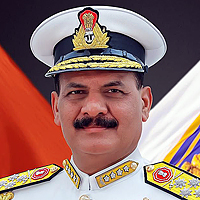
"Over the past 60 years, the growth of SP Guide Publications has mirrored the rising stature of Indian Navy. Its well-researched and informative magazines on Defence and Aerospace sector have served to shape an educated opinion of our military personnel, policy makers and the public alike. I wish SP's Publication team continued success, fair winds and following seas in all future endeavour!"

Since, its inception in 1964, SP Guide Publications has consistently demonstrated commitment to high-quality journalism in the aerospace and defence sectors, earning a well-deserved reputation as Asia's largest media house in this domain. I wish SP Guide Publications continued success in its pursuit of excellence.
The meeting between the Defence Ministers of India and Japan, in New Delhi, comes at a time of growing geopolitical tensions and sharpening strategic competition across the Indo-Pacific.
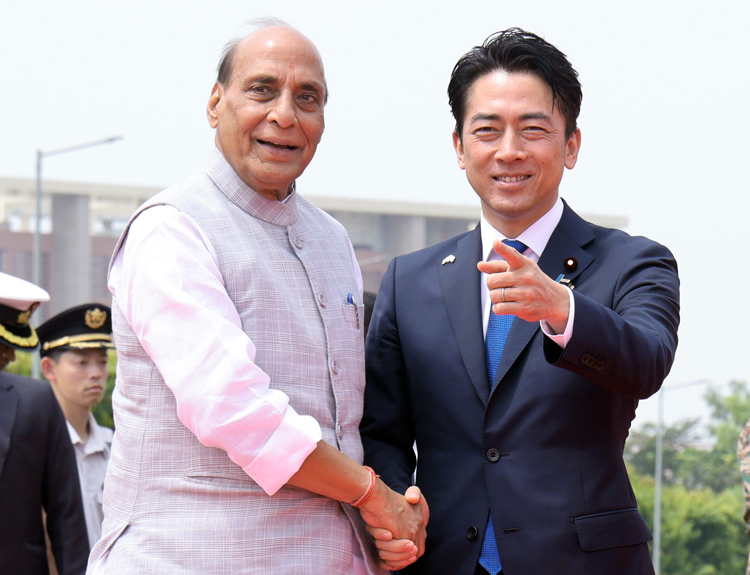
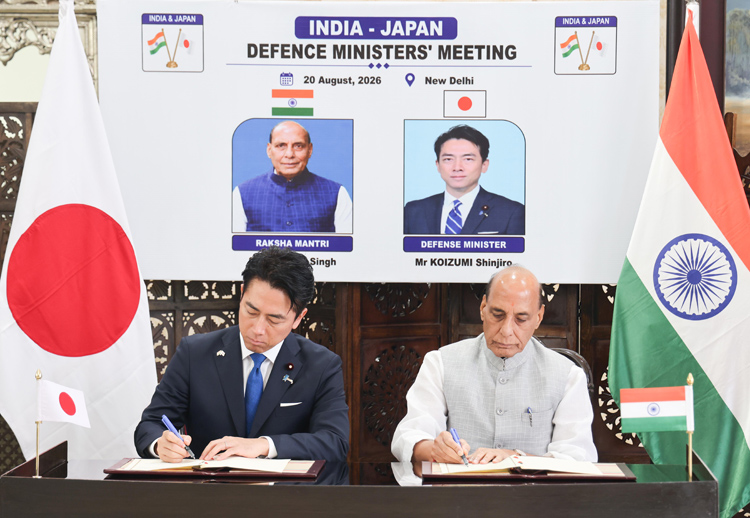
India and Japan on Thursday August 20, 2026, pushed their defence partnership into a more operational and industrial phase, with Defence Minister Rajnath Singh and his Japanese counterpart Shinjiro Koizumi signing a new arrangement on maritime security cooperation and agreeing to explore joint naval shipbuilding, mine countermeasure capabilities, ship repair and advanced defence technologies.
The two sides strongly opposed unilateral actions that impede freedom and safety of navigation and overflight, as well as attempts to change the status quo by force or coercion.
At the centre of the meeting was the signing of a Memorandum of Arrangement on Maritime Security Cooperation between India's Ministry of Defence and Japan's Ministry of Defence.
At the centre of the meeting was the signing of a Memorandum of Arrangement on Maritime Security Cooperation between India's Ministry of Defence and Japan's Ministry of Defence.
The framework is expected to strengthen cooperation between the Indian Navy and the Japan Maritime Self-Defense Force. The framework includes information sharing on Maritime Domain Awareness, Search and Rescue operations with a focus on Humanitarian Assistance and Disaster Relief.
The two Ministers also agreed to work to protect critical Sea Lines of Communication through naval visits, joint exercises, exchanges between personnel and subject matter experts, and logistical support, including access to ports and maintenance and repair facilities.
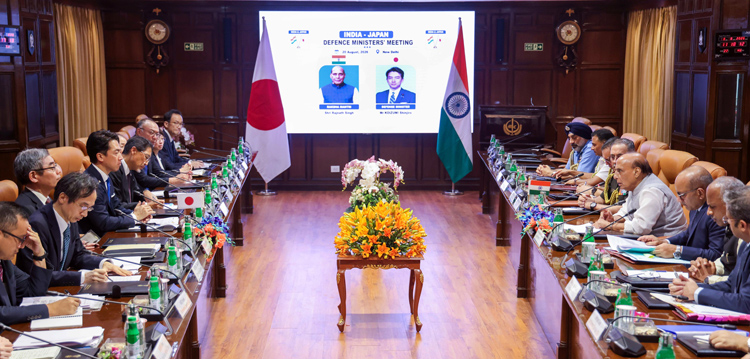
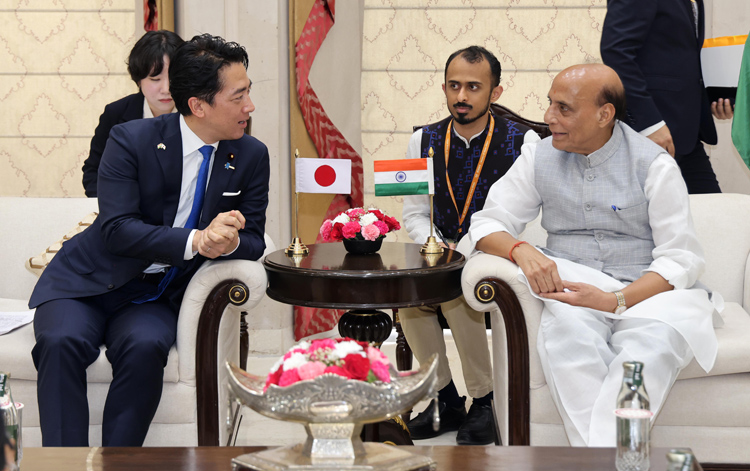
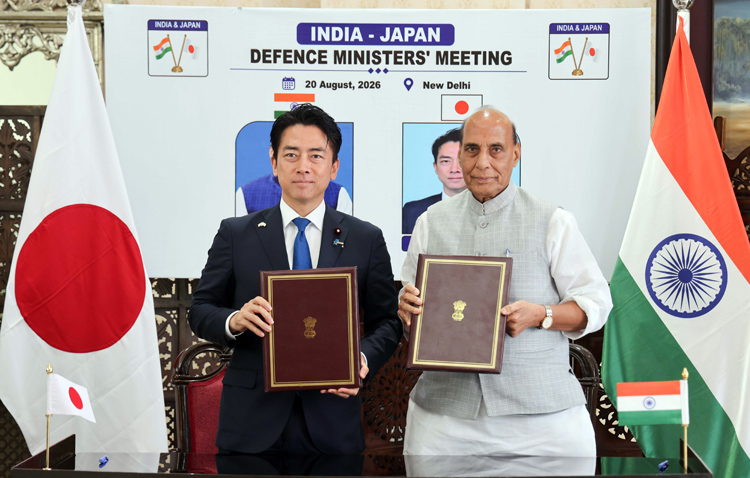
The maritime cooperation agenda, however, goes considerably beyond exercises. India and Japan agreed to move quickly towards concrete cooperation in areas of strategic and operational importance. To begin with, defence ministers inked the pact, including the enhancement of mine countermeasure capabilities and the possibility of joint development in naval shipbuilding and design.
The discussions could potentially open a new avenue for combining Japan's technological expertise with India's expanding shipbuilding and manufacturing capabilities under the 'Make in India' framework. That has been the most crucial part of the dialogue with Japan.
To begin with, defence ministers inked the pact, including the enhancement of mine countermeasure capabilities and the possibility of joint development in naval shipbuilding and design.
The two sides also agreed to deepen discussions on Japan's possible use of India's production capabilities in defence shipbuilding and related sectors. They further decided to work towards reciprocal provision of ship repair facilities.
Along with the joint development in shipbuilding, this could add to the possibilities of undertaking a ship repair arrangement in the near future.
For India, which is seeking to expand its naval presence across the Indian Ocean and develop itself into a major defence manufacturing hub, Japanese collaboration could bring access to specialised technologies and military and commercial industrial expertise.
For India, Japanese collaboration could bring access to specialised technologies and military and commercial industrial expertise
For Japan, India's growing shipbuilding capacity offers the possibility of developing a more resilient industrial and logistical presence across the Indo-Pacific.
Another important element of the talks was the proposed transfer of the shipborne UNICORN integrated communications antenna system.
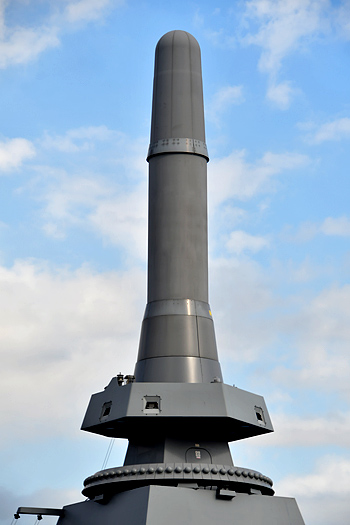
The project is expected to become the first defence equipment transfer project between India and Japan and has acquired symbolic importance for the bilateral defence relationship. The two Ministers reaffirmed their commitment to work towards its early realisation.
They also agreed to advance discussions on other defence equipment and technology projects by identifying operational requirements through consultations between the respective armed forces.
Another important element of the talks was the proposed transfer of the shipborne UNICORN integrated communications antenna system
Defence research and development is also set to emerge as an important pillar of the partnership. Rajnath Singh and Koizumi agreed to deepen cooperation between India's Defence Research and Development Organisation (DRDO) and Japan's Acquisition, Technology and Logistics Agency in advanced and emerging defence technologies.
The two countries also intend to convene a Defence Industry Forum, which could provide a platform for greater interaction between defence companies, research institutions and government agencies.
The meeting also underlined the growing operational engagement between the armed forces of the two countries. The Ministers welcomed the expansion of bilateral exercises, including the Army exercise Dharma Guardian and the maritime exercise JAIMEX. Ministers also noted progress in preparations for the Japan-India Air Force exercise Veer Guardian 26, scheduled to be held later this year. Significantly, fighter aircraft of the Japan Air Self-Defense Force are expected to visit India and participate in the exercise for the first time.
Fighter aircraft of the Japan Air Self-Defense Force are expected to visit India and participate in the exercise for the first time
The two sides agreed to increase the complexity of future exercises, integrate unmanned systems and explore the possibility of conducting joint exercises at short notice when opportunities arise. India and Japan will also promote exchanges between their Special Operations Forces and explore cooperation with India's proposed integrated theatre commands after they are established.
The wider Indo-Pacific was clearly at the heart of the discussions. However, such arrangements must take place on time. To ensure that the expanding agenda does not remain confined to individual projects, the two countries have decided to establish a new Working Group at the Director-General and Joint Secretary level.
The mechanism will coordinate cooperation across operational, intelligence, equipment, technology and industrial domains, to accelerate the various areas of engagement.
The Ministers also agreed to accelerate discussions for holding the fourth India-Japan Foreign and Defence Ministerial, or "2+2", meeting in Tokyo later this year.
Koizumi's visit to India also carried considerable symbolism. The agreements reached in New Delhi signal that the India-Japan defence relationship is entering a more ambitious phase.
The agreements reached in New Delhi signal that the India-Japan defence relationship is entering a more ambitious phase
From information sharing and logistics to naval shipbuilding, advanced communications systems and defence research, the two countries are now attempting to build a partnership that is not merely diplomatic or symbolic, but increasingly operational and industrial.
For two major Indo-Pacific powers facing an uncertain regional security environment, India and Japan want their strategic convergence to translate into capabilities on the ground—and at sea.
Manish Kumar Jha is a Consulting & Contributing Editor for SP's Aviation, SP's Land Forces and SP's Naval Forces and a security expert. He writes on national security, military technology, strategic affairs & policies.