






The insightful articles, inspiring narrations and analytical perspectives presented by the Editorial Team, establish an alluring connect with the reader. My compliments and best wishes to SP Guide Publications.

"Over the past 60 years, the growth of SP Guide Publications has mirrored the rising stature of Indian Navy. Its well-researched and informative magazines on Defence and Aerospace sector have served to shape an educated opinion of our military personnel, policy makers and the public alike. I wish SP's Publication team continued success, fair winds and following seas in all future endeavour!"

Since, its inception in 1964, SP Guide Publications has consistently demonstrated commitment to high-quality journalism in the aerospace and defence sectors, earning a well-deserved reputation as Asia's largest media house in this domain. I wish SP Guide Publications continued success in its pursuit of excellence.
India's quest for Counter Drones capability is critical. Globally, with growing drone threats, rapid innovation is breaking boundaries like RF-Cyber Takeover technology, which India must adopt
The rapid proliferation of drones is reshaping the global security landscape. Once considered niche military assets, unmanned aerial systems (UAS) are now widely available, inexpensive, and increasingly capable.
While drones have transformed sectors ranging from agriculture and logistics to disaster management and surveillance, they have also created an unprecedented security challenge. The question confronting governments worldwide is no longer whether drones pose a threat, but how to neutralise rogue drones safely without disrupting civilian life.
India faces an additional challenge. Pakistani-based networks have repeatedly employed drones to smuggle arms, explosives and narcotics across the Punjab and Jammu borders
The military dimension is even more serious. Conflicts in Ukraine, the Middle East and elsewhere have demonstrated how inexpensive drones costing a few hundred dollars can destroy multi-million-dollar military assets, conduct reconnaissance or execute precision strikes.
For India, where hostile drones have been used for cross-border smuggling, intelligence gathering, and attempts to target military installations, counter-drone technology has emerged as one of the country's highest defence and homeland security priorities.
Across the world, governments are witnessing an explosion in drone-related incidents. Airports have experienced flight disruptions due to unauthorised drone activity. Critical infrastructure such as power plants, refineries and nuclear facilities has become potential surveillance targets.
India faces an additional challenge. Pakistani-based networks have repeatedly employed drones to smuggle arms, explosives and narcotics across the Punjab and Jammu borders. Intelligence agencies have also detected attempts to fly drones near sensitive military establishments and strategic infrastructure.
As drones become smaller, faster and more autonomous, governments are increasingly demanding solutions that neutralise threats without disrupting normal operations or public safety
Recognising the seriousness of the threat, the Government of India has tightened aviation regulations, authorised security agencies to intercept unauthorised drones around sensitive areas, and significantly increased investments in indigenous and imported counter-drone technologies under the Ministry of Defence.
Stopping a rogue drone may sound straightforward, but in reality, it is one of the most complex challenges in modern security.
Traditional counter-drone methods each have significant limitations.
Electronic jamming disrupts communication between the drone and its operator. However, this approach can unintentionally interfere with nearby communication systems, GPS signals, Wi-Fi networks and even authorised drones operating in the same area. Moreover, many modern drones are increasingly resistant to conventional jamming techniques.
One of the most significant technological breakthroughs in recent years is Radio Frequency (RF) cyber-takeover technology and only a handful of companies worldwide possess mature RF cyber-takeover capabilities
Kinetic solutions–using bullets, missiles or interceptor drones–can eliminate the aerial threat but introduce another problem. Destroying a drone over an airport, stadium, refinery or crowded city can create dangerous debris, causing collateral damage or casualties.
As drones become smaller, faster and more autonomous, governments are increasingly demanding solutions that neutralise threats without disrupting normal operations or public safety.
One of the most significant technological breakthroughs in recent years is Radio Frequency (RF) cyber-takeover technology and only a handful of companies worldwide possess mature RF cyber-takeover capabilities.
Instead of simply blocking communications or destroying the drone, RF cyber-takeover systems take over the communications between the drone and its pilot. The system then assumes control of the drone, overrides the original commands and safely guides it to land in a designated secure zone.
This approach offers several advantages, such as minimal disruption to surrounding communications and no explosive destruction or falling debris. However, the most important thing is the preservation of the drone for forensic and intelligence analysis and, crucially, safe operation in densely populated environments. That works for a country like India.
AI algorithms analyse data from different sensors simultaneously, helping operators distinguish between legitimate drones, birds and potential threats while reducing false alarms
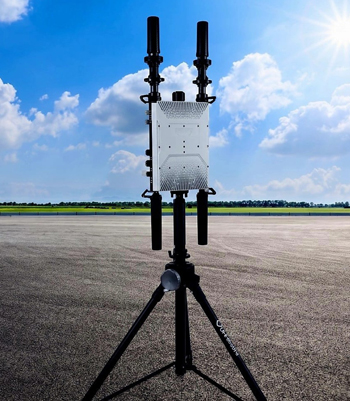
One of the leading examples is EnforceAir, developed by D-Fend Solutions, which employs advanced RF cyber-based takeover technology to detect, identify and safely assume control of rogue drones. Rather than shooting down an intruding drone, the system enables security operators to land it safely within a predefined zone, significantly reducing operational risks.
One of the biggest challenges in counter-drone tech is disrupting communications, GPS, or other technology in the area while it operates.
RF Cyber-takeover capability breaks those barriers where continuity prevails as communications, GPS, commerce, transportation, and everyday life smoothly proceed.
The Indian Armed Forces must focus on such advancement here.
Traditional air defence systems and legacy countermeasures are poorly suited for sensitive environments because they introduce severe secondary risks. Kinetic effectors create safety hazards from falling debris, while broad-spectrum jammers can disrupt critical communications, navigation, and Wi-Fi networks.
Additionally, legacy radars often struggle to distinguish small drones from birds or other objects, leading to frequent false alarms. Here, Counter-drone technology is also becoming increasingly intelligent.
India has emerged as one of the fastest-growing markets for counter-drone technologies. The armed forces are deploying advanced anti-drone systems to secure airbases, ammunition depots and forward military positions
Modern systems no longer rely on a single sensor. Instead, they integrate multiple technologies, including radar, electro-optical (EO) cameras, radio frequency sensors, artificial intelligence and sensor fusion.
AI algorithms analyse data from different sensors simultaneously, helping operators distinguish between legitimate drones, birds and potential threats while reducing false alarms.
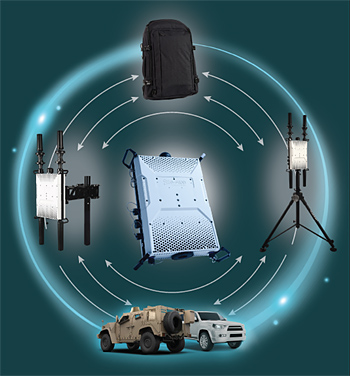
For more sophisticated threats, layered systems combine RF cyber technology with radar detection, EO tracking, optional electronic jamming and AI-driven command-and-control platforms. This integrated approach provides comprehensive protection against increasingly complex drone attacks.
For example, the most cutting-edge development is known as the SmartAir AI-based fusion engine, developed by D-Fend Solutions, which combines inputs from all detection layers into a single operational picture.
India has emerged as one of the fastest-growing markets for counter-drone technologies. The armed forces are deploying advanced anti-drone systems to secure airbases, ammunition depots and forward military positions. Border Security Force (BSF) units are expanding drone detection networks along international borders, while airports, nuclear facilities and strategic installations are investing in dedicated anti-drone capabilities.
Future drones are expected to feature greater autonomy, encrypted communications, swarm capabilities and artificial intelligence, making them significantly harder to detect and intercept using conventional methods
Beyond defence, several civilian sectors are accelerating adoption, like airports seeking uninterrupted flight operations, Power grids and renewable energy facilities, Police forces securing large public gatherings and Stadiums hosting international sporting events.
As India's drone economy expands under initiatives promoting domestic drone manufacturing and commercial applications, ensuring that legitimate drones can operate safely while rogue drones are neutralised will become increasingly important.
Security experts believe drone threats are evolving from isolated incidents into organised, persistent and strategic operations.
Future drones are expected to feature greater autonomy, encrypted communications, swarm capabilities and artificial intelligence, making them significantly harder to detect and intercept using conventional methods.
To stay ahead, counter-drone systems must remain software-driven and continuously updated to recognise new drone models, communication protocols and emerging tactics. AI-enabled sensor fusion, adaptive RF libraries and layered defence architectures are expected to define the next generation of anti-drone security.
The future lies in intelligent, non-destructive technologies capable of safely neutralising aerial threats without disrupting civilian life. As drone technology continues to evolve, India's investment in advanced counter-drone solutions will be critical to safeguarding both national security and its rapidly expanding drone ecosystem.
Manish Kumar Jha is a Consulting & Contributing Editor for SP's Aviation, SP's Land Forces and SP's Naval Forces and a security expert. He writes on national security, military technology, strategic affairs & policies.