



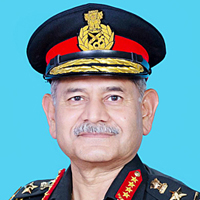
The insightful articles, inspiring narrations and analytical perspectives presented by the Editorial Team, establish an alluring connect with the reader. My compliments and best wishes to SP Guide Publications.
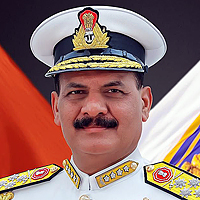
"Over the past 60 years, the growth of SP Guide Publications has mirrored the rising stature of Indian Navy. Its well-researched and informative magazines on Defence and Aerospace sector have served to shape an educated opinion of our military personnel, policy makers and the public alike. I wish SP's Publication team continued success, fair winds and following seas in all future endeavour!"

Since, its inception in 1964, SP Guide Publications has consistently demonstrated commitment to high-quality journalism in the aerospace and defence sectors, earning a well-deserved reputation as Asia's largest media house in this domain. I wish SP Guide Publications continued success in its pursuit of excellence.
As warships line up off Visakhapatnam once again, India is turning naval spectacle into strategic leverage. In a crowded and contested Indo-Pacific, IFR and MILAN are not rituals — they are instruments of maritime statecraft, designed to signal intent, build trust, and translate presence at sea into enduring influence.
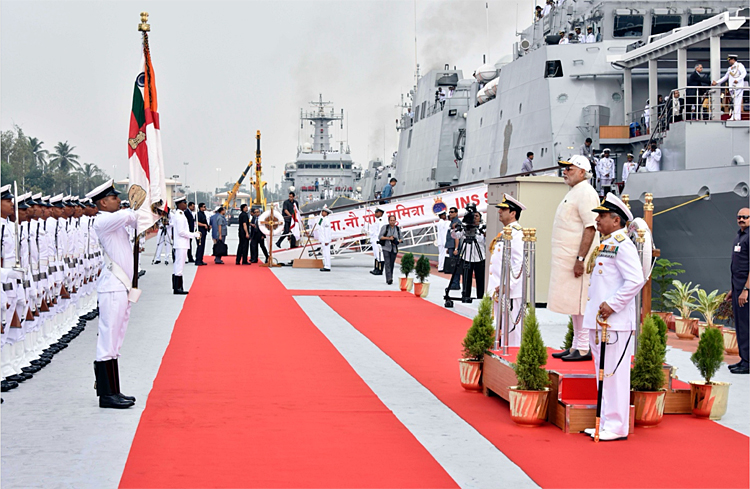
On a crisp February morning in 2016, the waters off Visakhapatnam glittered with steel and sunlight. Over seventy warships, Indian and foreign anchored off the Ramakrishna beach, their flags snapping in the wind, while sailors lined up the decks shining bright in white. It was a century-old spectacle, yet unmistakably modern: India's International Fleet Review (IFR). Ten years later, the pageantry will return, this time alongside Exercise MILAN, one of the Indian Ocean's largest naval gatherings. To the layman, these events may seem ceremonial, almost anachronistic. But for the Indian Navy, they are declarations. In the language of the sea-where presence matters as much as power-they signal ambition, reassure partners, and broadcast to the world that the Indian Ocean is not a venue for quiet contestation.
Navies have always understood the power of spectacle. Britain's Spithead reviews, stretching back to the age of sail, were less about inspecting ships than about advertising imperial reach. The United States did the same. Theodore Roosevelt's 'Great White Fleet, which circumnavigated the globe in 1907, was not a fighting mission but a diplomatic performance-16 gleaming battleships in white paint reminding the world that America had arrived as a naval power.
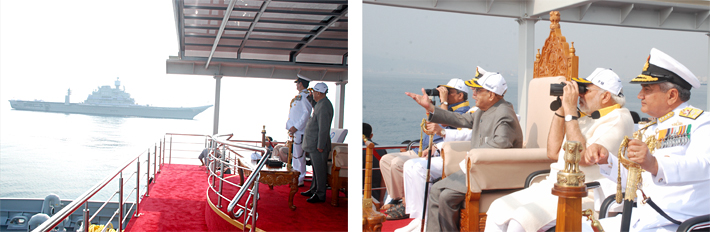
India absorbed this tradition early. The first Presidential Fleet Review (PFR) in 1953 saw President Rajendra Prasad review 33 ships off Bombay. The vessels were modest, and many were ageing, but the symbolism was immense: for the first time, Indian sailors saluted their own head of state, not a colonial viceroy. Later reviews charted the Navy's rise. INS Vikrant, India's first aircraft carrier, took pride of place in 1966. The Nilgiri-class frigates, the country's first indigenously built warships, were showcased in 1976. By 1989, India fielded not only the locally designed INS Godavari but also the leased nuclear submarine INS Chakra, a signal that New Delhi had joined a very select club. Each review was less about the President's inspection and more about the message: India was climbing the rungs of maritime power.
Pageantry has always carried purpose at sea; in 2026, Visakhapatnam will show how India is transforming ceremony into strategy, and visibility into influence.
By the turn of the century, India's ambitions required a bigger stage. The first International Fleet Review (IFR) in 2001 brought together 20 foreign navies and their ships off Mumbai. The presence of the United States of America, Russia, Japan, and ASEAN navies was a tacit acknowledgment that India's role in the Indian Ocean could not be ignored.
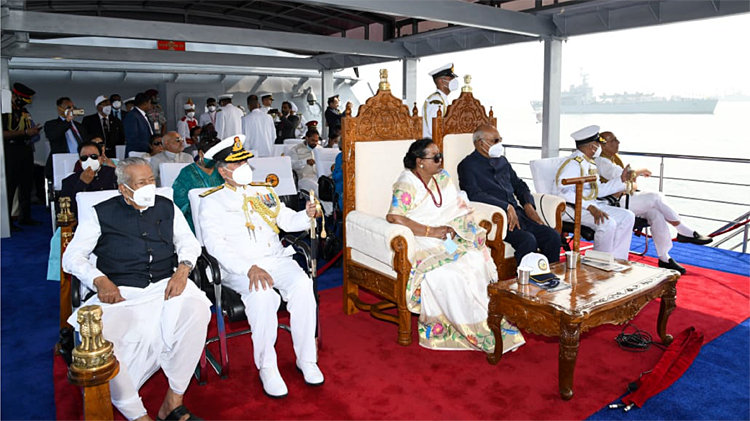
If 2001 was a debut, the 2016 IFR in Visakhapatnam was a declaration. Fifty foreign navies from major powers like the USA, France, and Japan to smaller Indian Ocean states were present. 70 ships, smartly lined up in columns off the coast saluted President Pranab Mukherjee. Indigenous destroyers (Kolkata class), frigates (Shivalik class) and corvettes (Kamorta class) stood proudly amongst their foreign counterparts, reflecting Indian Navy's emergence as a Builder's Navy.
If the International Fleet Review is about pageantry, Exercise MILAN is about practice and together they turn spectacle into strategy. First held in 1995 at Port Blair with just five navies-India, Indonesia, Singapore, Sri Lanka and Thailand, it began as a confidence-building measure in the Andaman Sea. By 2014, 16 navies were participating. In 2018, MILAN featured a full sea phase with complex manoeuvres, testing interoperability at a new level. By 2022, the exercise had shifted to Visakhapatnam, drawing 40 navies, including 13 foreign warships. In 2024, MILAN reached its largest scale yet: 47 navies participated, 16 with ships, alongside India's indigenous aircraft carrier, INS Vikrant.
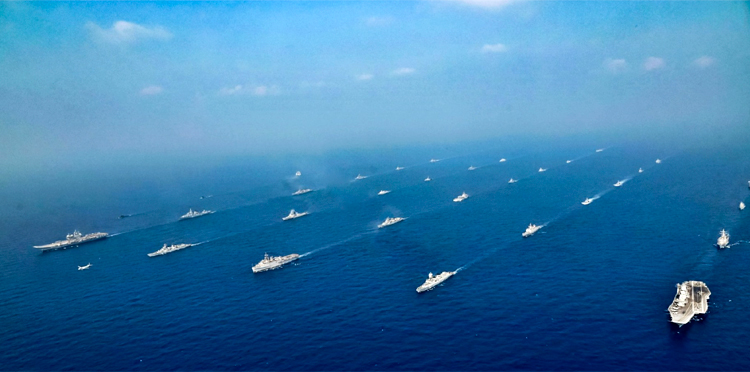
MILAN has steadily become a key element of India's maritime diplomacy. Its harbour phase blends diplomacy with culture: an International Maritime Seminar on maritime security, an International City Parade that winds through Visakhapatnam's streets, and even the 'MILAN of Young Officers' programme fostering camaraderie among junior officers.
From fleet reviews to multilateral drills, India is demonstrating that in today’s Indo-Pacific, leadership is earned as much through cooperation as through capability.
Critics often dismiss fleet reviews and multilateral exercises as expensive pageantry. But history suggests otherwise. Britain's Spithead reviews reassured allies and reminded rivals of imperial durability. America's Great White Fleet forced Japan and Europe to reckon with US. naval potential. India's IFRs and MILAN serve a similar purpose in today's Indo-Pacific.
PLA-Navy has expanded at breakneck speed, now operating warships and submarines in the Indian Ocean. Pakistan's Navy, though smaller, remains a persistent irritant in the Arabian Sea. The US Navy, while still the world's foremost naval power, is recalibrating its commitments, leaving partners uncertain. Meanwhile, littoral states from Maldives to Mauritius, and from Vietnam to Indonesia, face immediate challenges of piracy, illegal fishing, and climate-driven disasters.
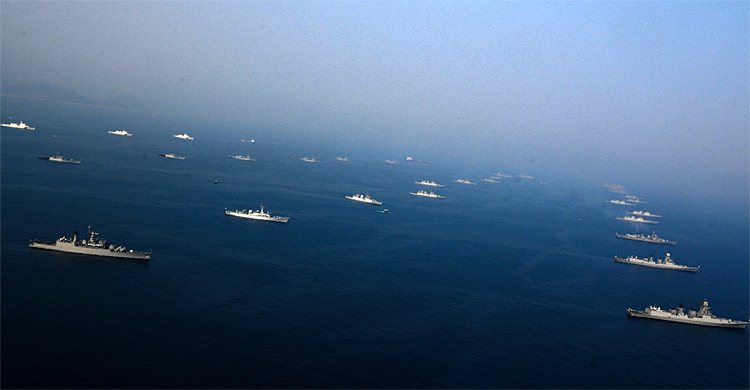
Against this backdrop, India's ability to convene navies is strategic capital. IFR reassures partners by projecting transparency and openness. MILAN builds interoperability, especially in non-traditional security domains like Humanitarian Assistance and Disaster Relief (HADR) and maritime policing. Both together broadcast that India is not merely a bystander but a Preferred Security Partner in the Indian Ocean. For a rising power, the ability to gather others under its flag, even temporarily, is itself a measure of influence.
The risk, of course, is that spectacle without substance can ring hollow. Hosting grand reviews and exercises raises expectations. If India cannot sustain presence in distant waters or back rhetoric with capability, critics may dismiss these spectacles as overreach. Yet even here, ceremony buys time. A littoral navy that trains at MILAN or parades in Visakhapatnam leaves with goodwill and confidence in India. For India, IFR and MILAN are not distractions from strategy they are strategy. designed to build partnerships while hard power catches up.
February 2026 will mark another defining moment in India's maritime story. Visakhapatnam (Vizag), the City of Destiny, will host both the International Fleet Review and Exercise MILAN, placing the city once again at the heart of India's Indo-Pacific strategy. This edition will be larger in scope and deeper in meaning: it will coincide with the Indian Ocean Naval Symposium's Conclave of Chiefs, showcasing India's convening power in a contested region. Beyond the warships at sea, the International City Parade will carry naval camaraderie into the streets, while a high-level Maritime Seminar will sharpen the intellectual edge of the gathering. Together, these events promise to elevate IFR and MILAN 2026 beyond ritual, transforming them into platforms for strategic dialogue, operational trust, and enduring people-to-people engagement.
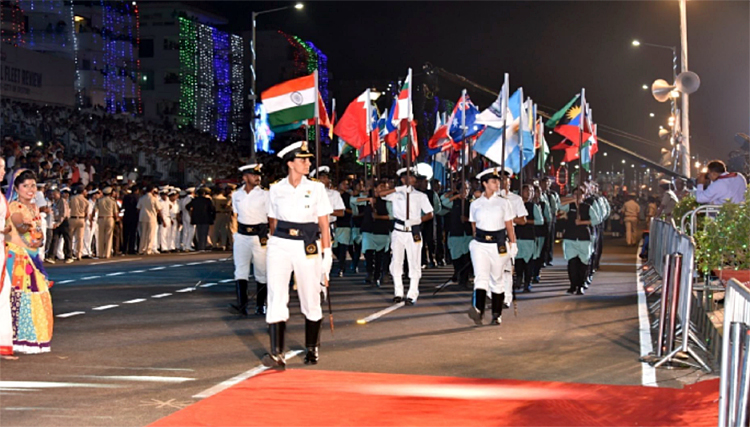
For India, this is the true essence of maritime diplomacy: turning pageantry into presence, tradition into trust, and ceremony into strategy. In an Indo-Pacific defined as much by competition as by cooperation, India's fleet reviews and exercises remind the world that the most decisive signals of leadership are not always sent in battle, but in peace.