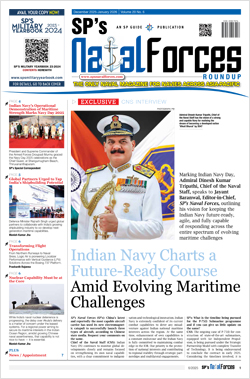






The insightful articles, inspiring narrations and analytical perspectives presented by the Editorial Team, establish an alluring connect with the reader. My compliments and best wishes to SP Guide Publications.
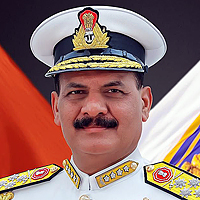
"Over the past 60 years, the growth of SP Guide Publications has mirrored the rising stature of Indian Navy. Its well-researched and informative magazines on Defence and Aerospace sector have served to shape an educated opinion of our military personnel, policy makers and the public alike. I wish SP's Publication team continued success, fair winds and following seas in all future endeavour!"

Since, its inception in 1964, SP Guide Publications has consistently demonstrated commitment to high-quality journalism in the aerospace and defence sectors, earning a well-deserved reputation as Asia's largest media house in this domain. I wish SP Guide Publications continued success in its pursuit of excellence.
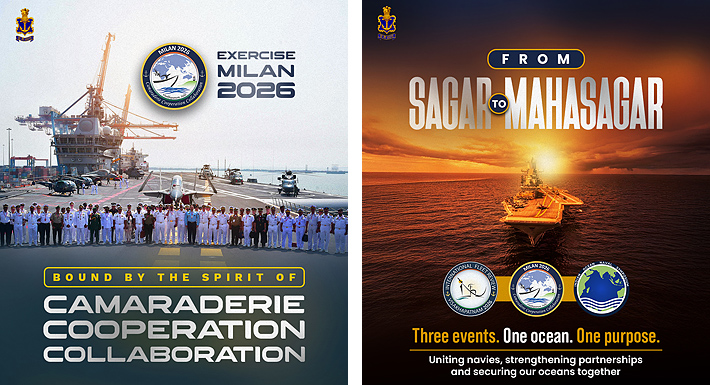
As warships converge on Visakhapatnam in February 2026, the International Fleet Review is no longer merely a parade of power. It is a rehearsal for a networked maritime future, where interoperability, shared norms, and collective resilience matter as much as firepower.
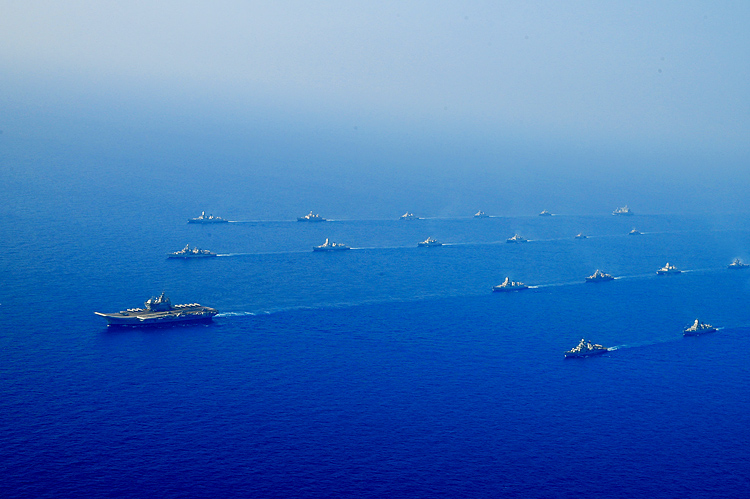
Event: International Fleet Review 2026
Dates: 15–25 February 2026
Location: Visakhapatnam, Andhra Pradesh
Host Command: Eastern Naval Command
Co-located Events:
Key Elements:
The oceans have always been shared spaces. Today, they are also shared vulnerabilities. Trade routes, energy flows, data cables, fisheries, and climate-stressed coastlines bind states together in ways that no single navy can manage alone.
"Navies are no longer confined by borders — they are tools of collective resilience."
In this context, IFR 2026 is not simply a ceremonial gathering — it is a window into how maritime security is being reimagined. Unlike fleet reviews of the past, which primarily showcased national strength, Visakhapatnam 2026 reflects a world of naval networks: alliances, information-sharing, legal regimes, and commercial interdependence.
The message is unmistakable: modern navies no longer operate in neat national boxes; they are instruments of collective resilience.
The strategic environment surrounding IFR 2026 is unforgiving. Grey-zone coercion, maritime militia activity, cyber intrusions into ports and navigation systems, and weaponised information campaigns have multiplied friction points at sea.
Climate change is compounding these risks — intensifying cyclones in the Bay of Bengal, reshaping coastlines, and increasing demand for humanitarian response. Meanwhile, global trade, energy, and food security remain dependent on open sea lanes that stretch across thousands of miles.
No navy, however capable, can secure this alone. IFR 2026 recognises that the scale and diversity of contemporary threats now demand collective responses, interoperable systems, and shared norms.
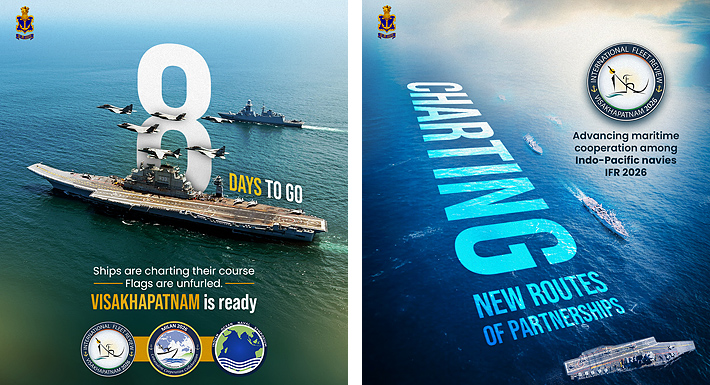
Interoperability once meant technical compatibility, shared frequencies, compatible equipment, or similar platforms. Today, it is deeper, more complex, and far more political.
At IFR 2026, the real work will happen in professional exchanges, tabletop exercises, and operational discussions, not just in parade lines. How is command shared in a multinational search-and-rescue? Who leads a counter-piracy boarding? How is evidence preserved? How are humanitarian corridors coordinated after a cyclone?
"Interoperability today is about law, doctrine, and trust — not just hardware."
These are not abstract questions — they are operational realities. In this sense, IFR 2026 acts as a crucible where shared procedures are tested, refined, and normalised.
Drones, autonomous surface and subsurface vehicles, and AI-enabled maritime domain awareness tools will be visible at IFR 2026. Yet the deeper conversation will not be about machines alone — it will be about governance.
How are autonomous platforms identified at sea? What are the rules of engagement? How is sensitive data shared securely? How do navies avoid miscalculation and unintended escalation?
Technology amplifies capacity; governance shapes its effects. IFR 2026 offers a rare collective forum to align standards, build confidence, and prevent technological advantage from becoming a source of instability.
Maritime security is no longer solely a military domain. Ports, commercial shipping firms, fisheries agencies, and cybersecurity providers are now frontline stakeholders.
IFR 2026 brings naval planners into dialogue with merchant marine leaders, coast guards, and industry representatives — recognising that commercial shipping often experiences disruption first, whether from cyber-attacks, piracy, or supply-chain shocks.
The objective is clarity of roles during crises: oil spills, migrant flows, infrastructure failures, or large-scale disasters at sea.
The legal architecture governing the oceans lags behind evolving maritime behaviour. IFR 2026 foregrounds debates on freedom of navigation, interdiction of illicit trafficking, and lawful responses to non-traditional threats.
Several delegations are expected to explore joint legal "playbooks" for multinational operations — a pragmatic step toward reducing misinterpretation and escalation. Operational practice here will shape future norms as much as formal treaties.
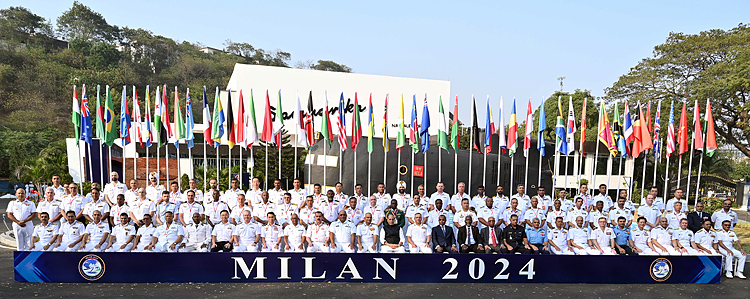
Collective security cannot be the preserve of major powers alone. Smaller navies and coast guards often operate on the frontlines of illegal fishing, trafficking, and environmental crimes.
IFR 2026 highlights capacity-building — shared logistics, maintenance cooperation, and mobile training teams. Strengthening regional partners is not charity; it is strategic investment in stability that benefits the entire maritime ecosystem.
A "Navy Without Borders" is an attractive vision — but not without friction. Partnerships can be misread as containment; cooperation can deepen rivalry.
IFR 2026 provides space for candid dialogue — both formal and informal — to balance deterrence with de-escalation, capability with restraint, and coordination with sovereignty. Transparency, predictability, and open communication will determine whether cooperation endures.
Perhaps the most significant shift reflected in IFR 2026 is a more human-centred understanding of maritime security.
Discussions on Humanitarian Assistance and Disaster Relief (HADR) underline that civilian protection, economic continuity, and environmental stewardship are now central to naval missions — not peripheral concerns. This broadens the legitimacy of naval engagement and aligns military action with humanitarian norms.
The true legacy of IFR 2026 will be judged after the ships depart Visakhapatnam.
Will it lead to permanent information-sharing hubs? Common standards for autonomous systems? Agreed legal frameworks for joint action? Shared logistics and interoperable command structures?
If trust becomes institutionalised through repeated exercises, shared protocols, and sustained collaboration, then "Navy Without Borders" becomes a model — not a moment.
Maritime security is inherently collective. As naval power shifts from platform-centric to network-centric, success will hinge less on the number of warships and more on the density of cooperative ties, the clarity of shared norms, and the agility of combined responses.
"The seas do not recognise borders — and neither can modern navies."
The oceans do not recognise political boundaries when disasters strike, commerce is threatened, or grey-zone actors test limits. IFR 2026 articulates a practical truth: to keep the seas open, safe, and stable, navies must operate beyond borders — together.