






The insightful articles, inspiring narrations and analytical perspectives presented by the Editorial Team, establish an alluring connect with the reader. My compliments and best wishes to SP Guide Publications.

"Over the past 60 years, the growth of SP Guide Publications has mirrored the rising stature of Indian Navy. Its well-researched and informative magazines on Defence and Aerospace sector have served to shape an educated opinion of our military personnel, policy makers and the public alike. I wish SP's Publication team continued success, fair winds and following seas in all future endeavour!"

Since, its inception in 1964, SP Guide Publications has consistently demonstrated commitment to high-quality journalism in the aerospace and defence sectors, earning a well-deserved reputation as Asia's largest media house in this domain. I wish SP Guide Publications continued success in its pursuit of excellence.
With the induction of INS Aridhaman, India joins an elite group of nations that possess nuclear-powered submarines. The expansion of this fleet not only enhances India's defensive posture but also reinforces its position as a major maritime power in the Indo-Pacific region
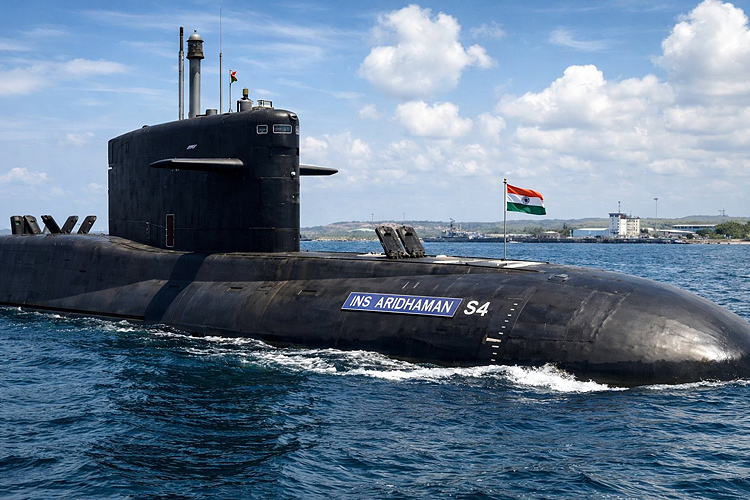
India has taken a significant leap in bolstering its maritime defence capabilities with the induction of INS Aridhaman, the latest addition to its nuclear-powered submarine fleet. Dubbed the "Destroyer of Foes," the submarine represents a major milestone in the country's strategic deterrence programme and underscores its growing technological self-reliance.
The Indian Navy has commissioned its indigenous nuclear-powered submarine INS Aridhaman, marking a major boost to the country's defence capabilities
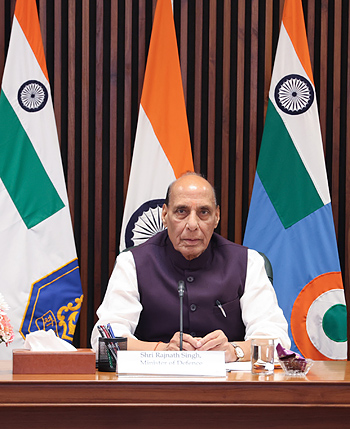
The Indian Navy has commissioned its indigenous nuclear-powered submarine INS Aridhaman, marking a major boost to the country's defence capabilities. The development, earlier hinted at by Defence Minister Rajnath Singh, strengthens India's strategic and naval power.
INS Aridhaman belongs to the Arihant-class of nuclear-powered ballistic missile submarines (SSBNs), forming the backbone of India's sea-based nuclear triad. Weighing approximately 7,000 tonnes, the submarine has been constructed with nearly 90 per cent indigenous technology, highlighting the success of India's domestic defence manufacturing ecosystem.
Powered by a nuclear reactor, INS Aridhaman is capable of operating underwater for extended periods without the need to surface for refuelling. This capability significantly enhances its stealth and survivability, making it a formidable second-strike platform. The submarine can achieve underwater speeds of up to 45 km/h, allowing for rapid and covert deployment.
INS Aridhaman belongs to the Arihant-class of nuclear-powered ballistic missile submarines (SSBNs), forming the backbone of India's sea-based nuclear triad
What sets INS Aridhaman apart from its predecessors—INS Arihant and INS Arighat—is its enhanced size and strike capability. The vessel is approximately 1,000 tonnes heavier and carries double the missile payload. While earlier submarines in the class feature four vertical launch tubes, Aridhaman is equipped with eight, significantly boosting its offensive potential.
The submarine can carry up to 24 K-15 'Sagarika' ballistic missiles, with a strike range between 750 and 1,500 kilometres. Additionally, it is capable of deploying eight long-range K-4 ballistic missiles, which can strike targets up to 3,500 kilometres away. Future upgrades are expected to include the K-5 missile, extending its reach to around 6,000 kilometres, thereby enhancing India's strategic reach across continents.
What sets INS Aridhaman apart from its predecessors—INS Arihant and INS Arighat—is its enhanced size and strike capability
INS Aridhaman's induction builds upon the legacy of INS Arihant, India's first indigenously built nuclear submarine, launched in 2009 and commissioned in 2016. This was followed by INS Arighaat, which joined the fleet in August 2024. Together, these submarines form a critical component of India's credible minimum deterrence strategy.
With this addition, India joins an elite group of nations that possess nuclear-powered submarines, including the United States, Russia, the United Kingdom, France, and China. The expansion of this fleet not only enhances India's defensive posture but also reinforces its position as a major maritime power in the Indo-Pacific region.
The expansion of this fleet not only enhances India's defensive posture but also reinforces its position as a major maritime power in the Indo-Pacific region
Defence analysts view INS Aridhaman as a decisive step toward strengthening India's second-strike capability, ensuring that the nation remains prepared to respond effectively to any nuclear threat. As geopolitical tensions evolve, the silent strength of submarines like Aridhaman will continue to play a crucial role in maintaining strategic stability.
Manish Kumar Jha is a Consulting & Contributing Editor for SP's Aviation, SP's Land Forces and SP's Naval Forces and a security expert. He writes on national security, military technology, strategic affairs & policies.