



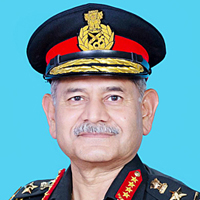
The insightful articles, inspiring narrations and analytical perspectives presented by the Editorial Team, establish an alluring connect with the reader. My compliments and best wishes to SP Guide Publications.
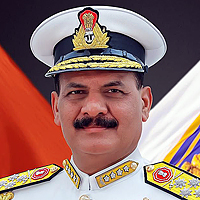
"Over the past 60 years, the growth of SP Guide Publications has mirrored the rising stature of Indian Navy. Its well-researched and informative magazines on Defence and Aerospace sector have served to shape an educated opinion of our military personnel, policy makers and the public alike. I wish SP's Publication team continued success, fair winds and following seas in all future endeavour!"

Since, its inception in 1964, SP Guide Publications has consistently demonstrated commitment to high-quality journalism in the aerospace and defence sectors, earning a well-deserved reputation as Asia's largest media house in this domain. I wish SP Guide Publications continued success in its pursuit of excellence.
Prime Minister Modi's visit to Indonesia and signing of agreements between the two countries, demonstrates that infrastructure, defence exports, and strategic partnerships are becoming increasingly interconnected
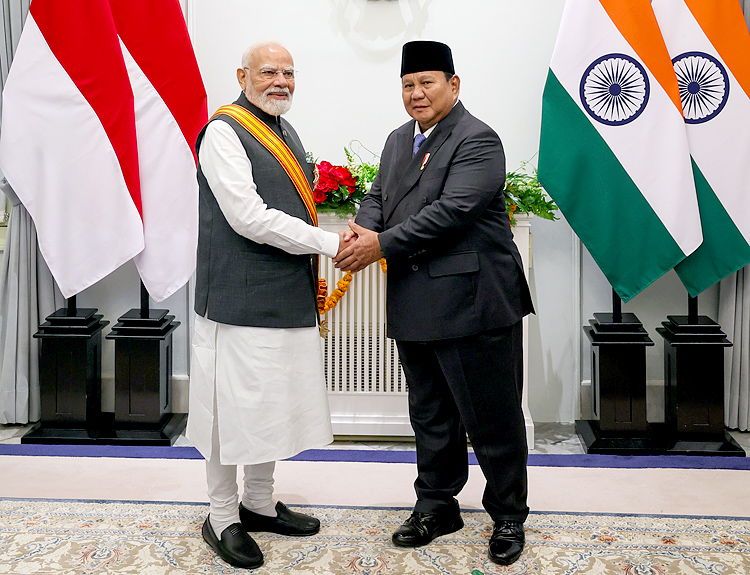
Prime Minister Narendra Modi's recent visit to Indonesia produced a series of agreements spanning defence, critical minerals and maritime cooperation.
While the expansion of defence exports through additional BrahMos supersonic cruise missiles and Astra Mk-1 beyond-visual-range air-to-air missiles drew considerable attention, the most consequential outcome may well be India's decision to jointly develop Indonesia's Sabang Port—an agreement that could reshape the strategic balance in the eastern Indian Ocean.
The most consequential outcome may well be India's decision to jointly develop Indonesia's Sabang Port
The Sabang Port project is far more than an infrastructure initiative. It represents India's growing maritime ambition and signals New Delhi's determination to strengthen its strategic footprint amid China's steadily expanding presence across the Indian Ocean Region (IOR).
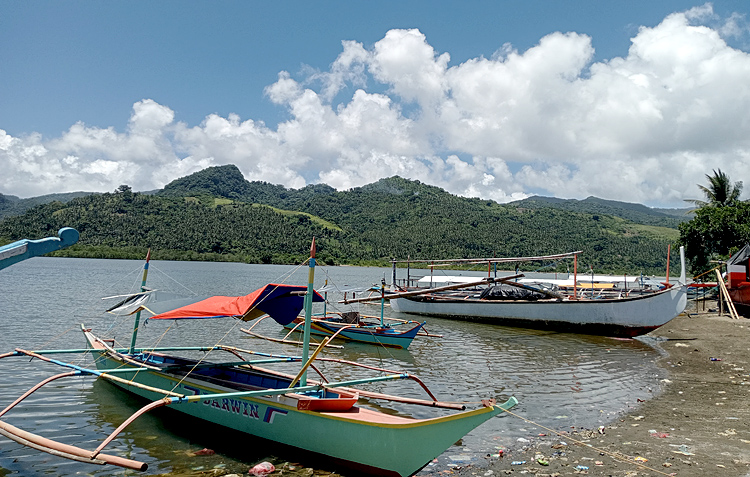
Located on Weh Island at the northern tip of Indonesia's Sumatra, Sabang overlooks the Strait of Malacca, one of the world's most critical maritime chokepoints. Nearly 40 per cent of global trade and a substantial share of East Asia's energy imports transit through this narrow passage linking the Indian Ocean with the South China Sea.
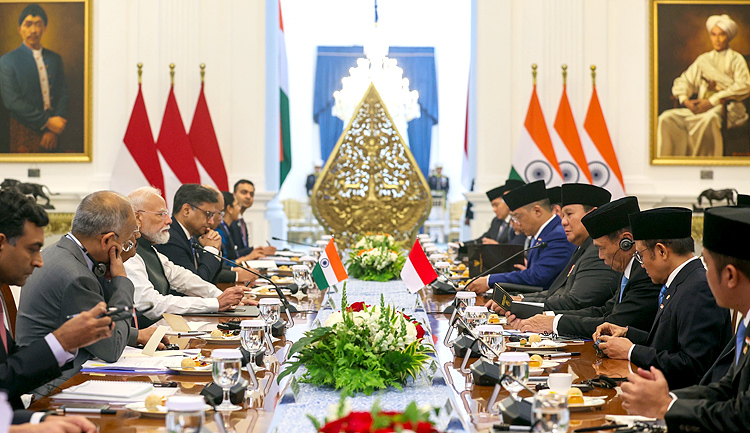
For decades, China has viewed the Strait of Malacca as a strategic vulnerability—often described as the "Malacca Dilemma"—because its economy remains heavily dependent on sea lines of communication passing through the strait. India's presence at Sabang places it in a position to monitor maritime activity at one of the busiest shipping lanes in the world.
The strategic value of Sabang becomes even more significant when viewed alongside India's own infrastructure projects. The deep-water port lies roughly 100 miles from India's upcoming transhipment port at Great Nicobar Island.
India's presence at Sabang places it in a position to monitor maritime activity at one of the busiest shipping lanes in the world
Together, these facilities could provide New Delhi with enhanced maritime domain awareness, improved surveillance capabilities and greater logistical reach across the eastern Indian Ocean.
The arrangement also complements India's broader Indo-Pacific strategy, which emphasises secure sea lanes, freedom of navigation and partnerships with like-minded regional powers.
Rather than establishing a military base, the Sabang project offers India sustained access and operational flexibility at a location of immense geopolitical importance.
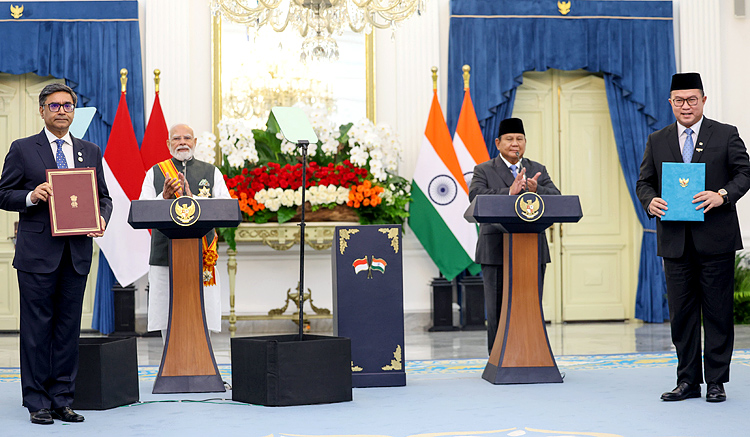
The Sabang agreement reflects the rapid evolution of India-Indonesia ties from economic cooperation to a comprehensive strategic partnership.
Indonesia occupies a central position in ASEAN and controls some of the world's most important maritime approaches. For India, deeper engagement with Jakarta supports its "Act East" policy while reinforcing security cooperation across Southeast Asia.
The Sabang agreement reflects the rapid evolution of India-Indonesia ties from economic cooperation to a comprehensive strategic partnership
The two countries also signed agreements on cooperation in critical minerals, an increasingly important sector as nations compete to secure supply chains for electric vehicles, renewable energy technologies and advanced defence manufacturing.
Reducing dependence on concentrated global supply chains has become a priority, making collaboration in critical minerals an important pillar of the bilateral relationship.
Defence cooperation further cemented Indonesia as a truly strategic partner of India.
Indonesia had earlier signed a contract for one battery of the BrahMos supersonic cruise missile. The latest understanding hints at the phased procurement of additional BrahMos systems, underlining Jakarta's confidence in India's flagship defence export.
The two countries also signed agreements on cooperation in critical minerals, an increasingly important sector as nations compete to secure supply chains
The BrahMos, jointly developed by India and Russia, is regarded as one of the world's fastest operational supersonic cruise missiles and has become a key instrument of India's defence diplomacy in the Indo-Pacific.
Equally significant is the agreement to procure Astra Mk-1 beyond-visual-range air-to-air missiles for Indonesia's fleet of 16 Su-30 fighter aircraft.
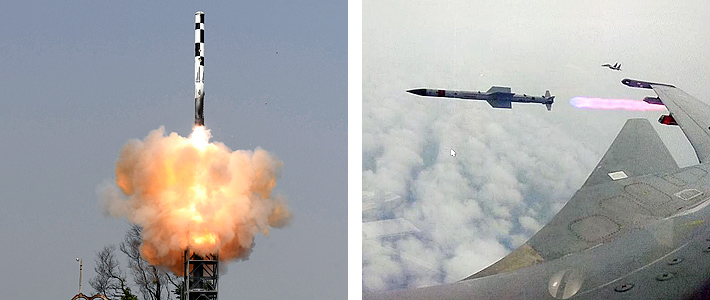
According to official sources, the current understanding serves as an umbrella agreement, with negotiations continuing before a formal procurement contract is signed.
India's public sector entity, Bharat Dynamics Limited (BDL), will integrate the Astra missile with Indonesia's Su-30 fleet, marking another milestone for India's indigenous defence industry.
The latest understanding hints at the phased procurement of additional BrahMos systems, underlining Jakarta's confidence in India
Already operational with the Indian Air Force, the Astra Mk-1 is powered by a solid-fuel rocket motor and has an engagement range of approximately 80–110 kilometres, enabling pilots to engage hostile aircraft well beyond visual range.
India is simultaneously advancing the development of the longer-range Astra Mk-2, expected to achieve an engagement range of nearly 160 kilometres. The Defence Acquisition Council (DAC) has already approved its procurement for the Indian Air Force, reflecting India's emphasis on indigenous high-end missile capabilities.
Taken together, the Sabang Port agreement, expanding missile cooperation and collaboration in critical minerals illustrate a broader strategic shift in India's engagement with Southeast Asia.
China's growing naval deployments, port investments under the Belt and Road Initiative, and expanding military footprint across the Indo-Pacific have prompted regional powers to diversify their security partnerships. India's closer strategic alignment with Indonesia reflects this evolving regional calculus.
India's closer strategic alignment with Indonesia reflects this evolving regional calculus
Sabang does not directly challenge China's presence, nor is it intended to militarise the Strait of Malacca. Instead, it provides India with enhanced maritime access, stronger surveillance capabilities and greater strategic depth at a location central to Indo-Pacific security.
As New Delhi seeks to emerge as a leading maritime power, the Sabang initiative demonstrates that infrastructure, defence exports, and strategic partnerships are becoming increasingly interconnected instruments of national power.
For India, the agreement represents not merely another bilateral project, but a carefully calibrated move to reinforce its influence in the Indo-Pacific and maintain a favourable balance of power in one of the world's most strategically contested maritime regions.
Manish Kumar Jha is a Consulting & Contributing Editor for SP's Aviation, SP's Land Forces and SP's Naval Forces and a security expert. He writes on national security, military technology, strategic affairs & policies.