





The insightful articles, inspiring narrations and analytical perspectives presented by the Editorial Team, establish an alluring connect with the reader. My compliments and best wishes to SP Guide Publications.

"Over the past 60 years, the growth of SP Guide Publications has mirrored the rising stature of Indian Navy. Its well-researched and informative magazines on Defence and Aerospace sector have served to shape an educated opinion of our military personnel, policy makers and the public alike. I wish SP's Publication team continued success, fair winds and following seas in all future endeavour!"

Since, its inception in 1964, SP Guide Publications has consistently demonstrated commitment to high-quality journalism in the aerospace and defence sectors, earning a well-deserved reputation as Asia's largest media house in this domain. I wish SP Guide Publications continued success in its pursuit of excellence.
Budgetary pressures have strained timelines as the Indian Navy's submarine modernisation requires ₹1.2 lakh crore over the next decade, per the 15-Year Naval Plan
 |
The Author is Former Director General of Information Systems and A Special Forces Veteran, Indian Army |
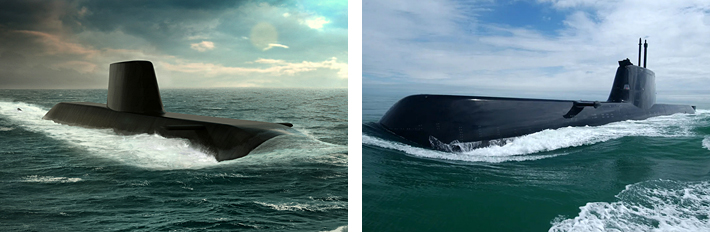
The Indian Navy currently operates a modest fleet of 18-19 submarines, comprising 15-16 conventional diesel-electric submarines (SSK) and 3 nuclear-powered ballistic missile submarines (SSBN). The conventional fleet mainly includes the Kalvari, Shishumar, and Sindhughosh classes, while the nuclear deterrent includes the indigenously built INS 'Arihant', INS 'Arighat' and INS 'Aridhaman'. The proposed $8 billion deal for the six advanced submarines under Project-75(I) between India and Germany is in advanced stage although the final contract is yet to be signed. The procurement of these six submarines under Project-75(I) was approved by the Defence Acquisition Council, headed by the then Defence Minister Arun Jaitley in October 2014.
The proposed $8 billion deal for the six advanced submarines under Project-75(I) between India and Germany is in advanced stage.
Quoting media reports, it was reported in these columns, on January 27, 2026, that if the India-Germany deal comes through, it would, for the first time include technology transfer for submarine production, and then India would scrap plans to buy three more French submarines. Report further said that Germany's ThyssenKrupp Marine Systems (TKMS) and India's state-owned Mazagon Dock Shipbuilders Ltd (MDL) will work together to manufacture the vessels, and that the new submarines will be equipped with air-independent propulsion (AIP) systems, which increase the boats' endurance and allows them to remain submerged longer than with diesel-electric propulsion. Also, that the six advanced, Air-Independent Propulsion (AIP) equipped Type-214NG submarines, would mark a major boost to India's naval strength, domestic defence manufacturing, and strategic partnership with Germany.
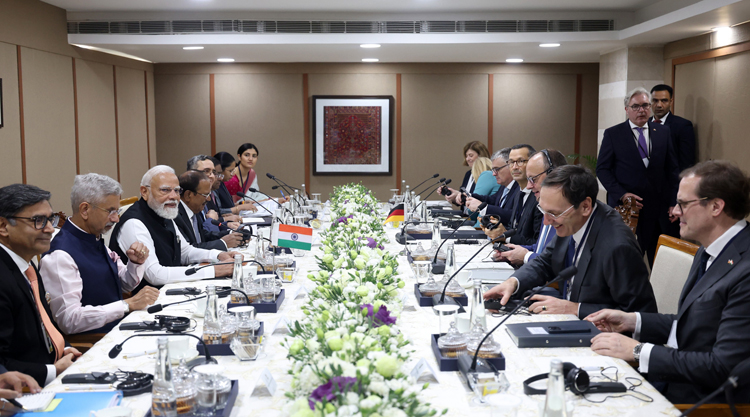
However, during German Chancellor Friedrich Merz's India visit on January 12, 2026, India and Germany signed 19 memorandums of understanding (MoUs) and a Joint Statement was also issued, it is not known if any MoU was signed on Indo-German collaboration for submarine production under 'Make in India'. There was no such mention in the Joint Statement and Prime Minister Narendra Modi also did not mention co-production of submarines in his speech. The deal is expected to be finalised by March 2026. Under 'Make in India', indigenous content is expected to start at 45 per cent and rise to 60 per cent for the final units. The Indian Navy had stipulated that only operational submarine designs would be considered under Project-75(I), however, TKMS has proposed a submarine based on its Type 214 design, incorporating specific modifications for the Indian Navy.
The six advanced, Air-Independent Propulsion (AIP) equipped Type-214NG submarines, would mark a major boost to India's naval strength.
Reports of March 2026 now state that the much-awaited indigenous nuclear-powered attack submarine (SSN) is unlikely to enter service before 2036, leaving India's underwater strike capability a critical vulnerability in its naval arsenal. This delay exacerbates a strategic gap, leaving the Indian Navy reliant on ageing assets and leased platforms amid escalating threats in the Indian Ocean Region (IOR). INS 'Arihant', commissioned in 2016, serves primarily as a strategic deterrent with limited strike capabilities due to its slower speed and shorter range compared to dedicated attack submarines.
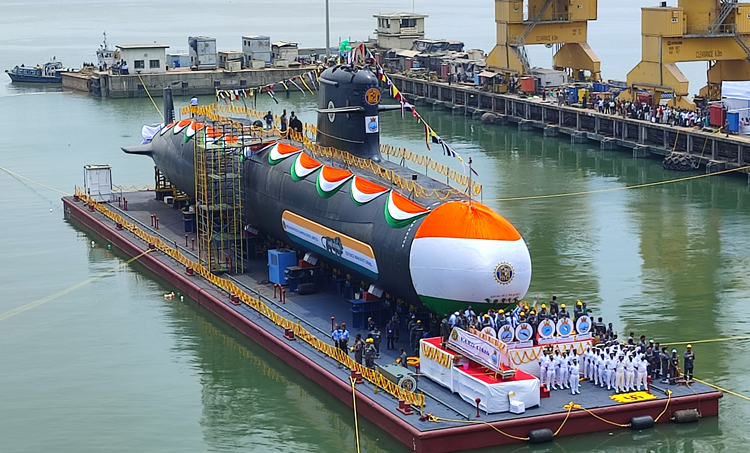
For India, SSNs are essential to counter China's expanding underwater fleet, which includes over 12 SSNs and advanced Type 093B Shang-class boats. It is well-known that nuclear-powered attack submarines, or SSNs, offer unparalleled advantages; unlimited endurance, high submerged speeds exceeding 30 knots, and the ability to launch precision strikes with cruise missiles while remaining stealthy for weeks. India's Project 75-Alpha (P-75A), in collaboration with Russia under a 2019 inter-governmental agreement was valued at over $3 billion. This project aims to construct six SSNs at Visakhapatnam's Shipbuilding Centre, leveraging leased Akula-class technology and MDL expertise. However, progress has stalled due to supply chain disruptions, technological transfer hurdles, and funding constraints.
India's Project 75-Alpha (P-75A), in collaboration with Russia. Aims to construct six SSNs at Visakhapatnam's Shipbuilding Centre, leveraging leased Akula-class technology and MDL expertise.
Recent parliamentary reports indicate that the first SSN keel-laying may slip to 2028, with sea trials not before 2032 and full operational capability around 2036, pushing back earlier timelines by a minimum of four years. Compounding this, India's conventional submarine fleet is dwindling. Of the 16 diesel-electric submarines planned under Project 75(I), selection remains undecided after a decade of evaluations involving global contenders like Germany's Type 212 and Spain's S-80. The Navy's current 11-boat fleet averages over 20 years in age, with half undergoing extended refits.
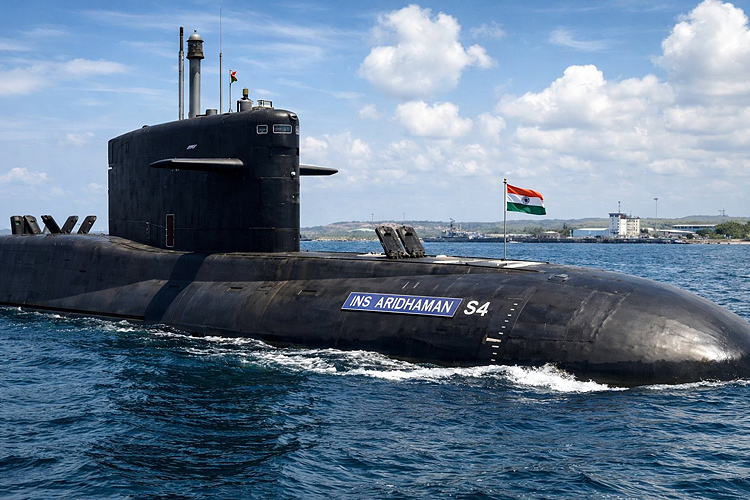
In contrast, China's People's Liberation Army Navy (PLAN) now fields six Type 095 SSNs under construction, alongside Jin-class SSBNs patrolling the Bay of Bengal. These assets enable long-range strikes against Indian carriers and island territories, outpacing Indian Navy's capabilities. Pakistan is also bolstering its underwater posture with China-supplied Yuan-class (Hangor) submarines, equipped with AIP systems for extended submerged operations. Eight of these submarines are slated for delivery by 2028, armed with Babur-3 nuclear cruise missiles.

Budgetary pressures strain timelines. The Indian Navy's submarine modernisation requires ₹1.2 lakh crore over the next decade, per the 15-Year Naval Plan. Capital outlay for FY2026 hovers at ₹25,000 crore, insufficient against inflation and import dependencies for high-strength steel and sensors. To add to this are technological bottlenecks - the US Virginia-class and Russia's Yasen-M demand advanced pump-jet propulsors and anechoic coatings; whereas, India's private sector shows promise but lacks scale. The Indo-Pacific's contested waters demand SSN deterrence, which India lacks. Alternatives include partnering with France for Scorpene-derived SSNs or accelerating Project P-75I with electric batteries over AIP. Bridging the SSN void requires political will to match China's aggressive shipbuilding to secure trade and sovereignty in the IOR.