






The insightful articles, inspiring narrations and analytical perspectives presented by the Editorial Team, establish an alluring connect with the reader. My compliments and best wishes to SP Guide Publications.

"Over the past 60 years, the growth of SP Guide Publications has mirrored the rising stature of Indian Navy. Its well-researched and informative magazines on Defence and Aerospace sector have served to shape an educated opinion of our military personnel, policy makers and the public alike. I wish SP's Publication team continued success, fair winds and following seas in all future endeavour!"

Since, its inception in 1964, SP Guide Publications has consistently demonstrated commitment to high-quality journalism in the aerospace and defence sectors, earning a well-deserved reputation as Asia's largest media house in this domain. I wish SP Guide Publications continued success in its pursuit of excellence.
India's military response through Operation Sindoor symbolised a transformative shift in modern warfare, marked by the increasing integration of drones, precision-strike capabilities and indigenously developed defence systems into modern combat operations
 |
The Author is former Chief of Staff of a frontline Corps in the North East and a former helicopter pilot. He earlier headed the China & neighbourhood desk at the Defence Intelligence Agency. He retired in July 2020 and held the appointment of Addl DG Information Systems at Army HQ. |
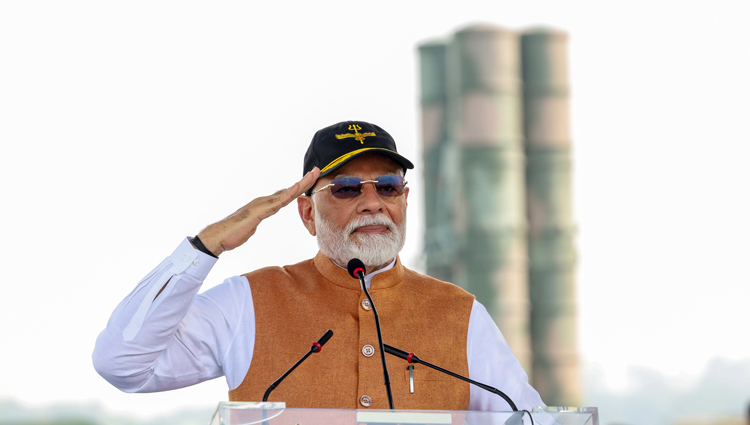
A year has passed by since India launched Op Sindoor on May 7, 2025 as a retribution for the tragic Pahalgam massacre killing 26 people on April 22, 2025. The tragedy left countless homes in despair, survivors and relatives recall a shattered dream vacation and the enduring trauma of witnessing their loved ones killed at close range. While the families try to cope with their losses and rebuild their lives, the country and the military have the onerous task of a comprehensive reprisal of the circumstances leading to the massacre and our retaliation through Op Sindoor with precision strikes deep within Pakistani territory targeting terrorist bases and military infrastructure.
It is imperative to recall some events that occurred prior to Op Sindoor which may have contributed towards and influenced its planning and execution. Two recent conflicts preceding Op Sindoor and one after Op Sindoor that is ongoing, provide important information and insights into how modern wars will employ the growing spectrum of missiles, drones, and artillery. They are the Armenia-Azerbaijan conflict of 2020, the Ukraine war since February 2022 and the currently frozen Iran war that erupted on February 28, 2026. Juxtaposed against these three conflicts, we can be proud to state that Op Sindoor was the most spectacular, surgical and conclusive four-days operation with impactful outcomes.
Russia's relentless use of low-cost drones signals a broader shift toward attrition warfare based on overwhelming air defence systems with sheer numbers
The conflict between Armenia and Azerbaijan over the disputed Nagorno-Karabakh region which began in late September, 2020 concluded on November 10, 2020 included the heavy use of missiles, drones, and rocket artillery. The 44-day war featured a diverse array of legacy and advanced air and missile strike and defence platforms. Drones of Russian, Turkish, Israeli, and indigenous Azerbaijani designs performed both reconnaissance missions to support artillery use and strike missions. Unmanned aerial vehicle (UAV) and loitering munition attacks were able to destroy heavy ground units, including T-72 tanks and advanced S-300 air defences. The conflict's use of these various weapons provided important information and insights into the use of missiles, drones, and artillery. The lessons were noted, deeply analysed and absorbed by the Indian military planners, reshaping response matrix to a never-ending hostile Pakistan staging intermittent terror attacks on the Indian soil.
Similarly, since Russia's full-scale invasion of Ukraine in February 2022, the war there has been impacted by attritable, cheap drones and rapidly growing roster of unmanned and robotic systems. Collectively, these technologies are redefining how military forces can wage modern warfare. With both sides in this war rushing to secure a technological advantage, the Ukrainian battlefield is transforming into a clash between conventional forces backed by a growing number of autonomous and remote-controlled systems. While there is obvious combat power asymmetry between Ukraine and Russia, this hasn't translated into obvious outcomes as frontlines remain largely frozen and contested since the last three years. Ukraine continues to innovate defensive and offensive capabilities to ward off a clear Russian victory, the latest being the anti-drone Sky Map system using thousands of acoustic sensors which it has deployed since March 2026 in the Gulf region to fend of incoming Iranian drones.
For the first time in India's independent history, made-in-India defence equipment played a pivotal role in both offensive and defensive missions
On the other side, Russia's drone campaign utilised inexpensive Shahed drones to saturate Ukrainian air defences and erode civilian morale through persistent nightly attacks. Originally Iranian made, these drones are now mass produced in Russia (Geran-2) using Western electronics and essential Chinese components. Russia's relentless use of low-cost drones signals a broader shift toward attrition warfare based on overwhelming air defence systems with sheer numbers. This strategy is now being successfully replicated by Iran in response to the overwhelming asymmetry of conventional military prowess of the US and Israel.
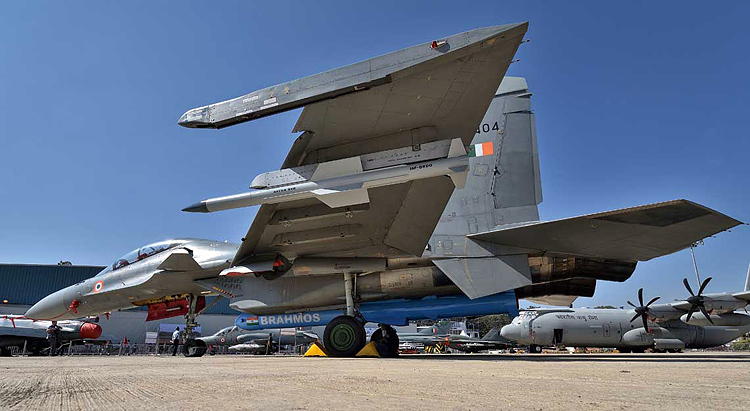
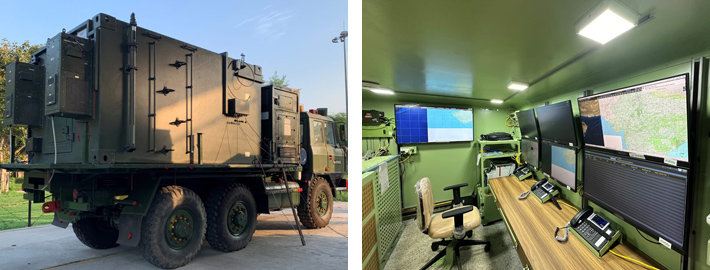
The Indian Armed Forces have been keenly observing and studying the ongoing and past armed conflicts to develop their own battlefield and operational strategies and weapon acquisition plans to support the doctrinal shift. Op Sindoor wasn't a spur-of-moment reflex response to a terror attack but the application of a carefully thought out strategy that had been continually evolving as emerging technologies upend conventional force application. For the first time in India's independent history, made-in-India defence equipment played a pivotal role in both offensive and defensive missions. While lethal weapons such as Brahmos and Sky Striker decimated Pakistani terror and military targets, defensive systems such as Integrated Air Combat and Control System (IACCS), Akashteer, Akash, and the Drone-Detect, Deter and Destroy (D4) system demonstrated their prowess in shielding India's land and skies from the barrage of Pakistani missile and drone attacks.
Clearly defined objectives provide space for punitive strikes within the escalation ladder and air power, once considered escalatory, has been normalised
The impressive display of the indigenously designed and/or manufactured items has given the domestic industry much-needed confidence, which was missing earlier. Despite the size, scope and breadth of its production, the domestic industry in the past had to operate under the shadow of foreign-made weapons. To be sure, imported equipment, whether the Rafale, its associated weapons package (Meteor and SCALP missiles and HAMMER munitions) or the S-400 missile defence system, played an important role in Operation Sindoor, but the indigenous weapons and systems stole the show.
Some key takeaways from this short but intense conflict are that clearly defined objectives provide space for punitive strikes within the escalation ladder and air power, once considered escalatory, has been normalised. This is important to note against the backdrop of our hesitation to use air power effectively during the 1999 Kargil conflict fearing escalation. Paired with long range precision weapons, air power presents compelling options to expand the threshold under the nuclear overhang.
Learning from the experiences and success in Op Sindoor, India is looking to build its own sovereign swarm warfare capability and develop an indigenous swarm algorithm
For the first time since 1971, military asymmetry between India and Pakistan was firmly established. Key capabilities that stood out during the conflict went through a long development curve, like the supersonic cruise missile BrahMos and its integration with Su-30 fighter jets. On the modernisation front, some delays proved to be a blessing in disguise, like the legacy air defence guns that emerged as a cost-effective solution to counter small drones.
Learning from the experiences and success in Op Sindoor, India is looking to build its own sovereign swarm warfare capability and develop an indigenous swarm algorithm. The Defence Acquisition Council (DAC) approved a ₹30,000 crore ($3.4 billion) deal in August 2025 to acquire 87 Medium Altitude Long Endurance (MALE) drones for the Indian Army, Navy, and Air Force. Later in December 2025, the DAC cleared proposal for the Indian Army to acquire 850 kamikaze drones (loitering munitions) in a defence procurement deal worth approximately ₹2,000 crores. In the sphere of rocket artillery, DRDO has revealed that India's upcoming 120 km range Guided Pinaka Mk3, also known as the Long Range Guided Rocket (LRGR), will be significantly cheaper than the Israeli EXTRA rockets currently used in the recently inducted Suryastra system.
Op Sindoor validated the urgent need to build and fully operationalise own navigational system to prevent interference from the original manufacturer and service provider countries
Op Sindoor validated the urgent need to build and fully operationalise own navigational system to prevent interference from the original manufacturer and service provider countries who may not be aligned with our interests in evolving geopolitical situations. It is a matter of concern that the NavIC system, also known as the Indian GPS, is currently facing operational challenges due to the failure of its atomic clocks. As of March 2026, only three of the eleven satellites launched for the system are operational, which is insufficient for providing accurate position, navigation, and timing services. The system's failure to provide full functionality raises significant security concerns, especially for India's strategic and military operations. The Indian Space Research Organisation (ISRO) is working on plans to launch replacement satellites to enhance the system's reliability and continuity of services.
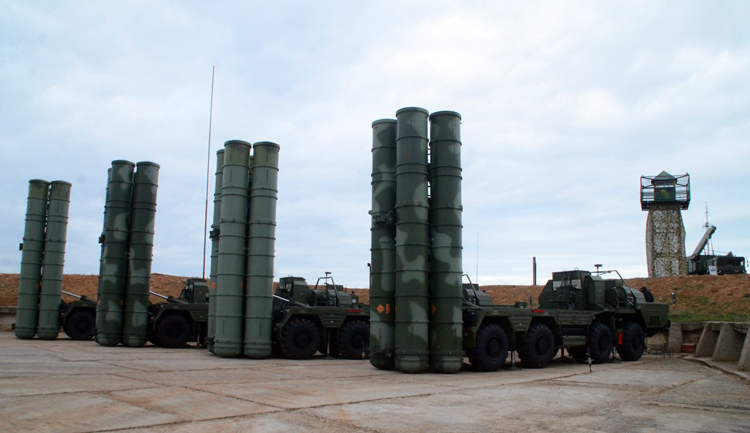
To boost air defence capabilities, the fourth S-400 missile system has already been shipped from Russia after completing pre-dispatch checks by Indian Air Force officials. It is expected to reach an Indian port by mid-May 2026. This delivery comes just around the anniversary of Operation Sindoor, where the S-400 system played a key role in protecting Indian airspace from aerial threats. The S-400 Triumf (named Sudarshan in Indian service) is a Russian-made long-range surface-to-air missile system capable of detecting, tracking, and engaging aircraft, drones, and missiles at distances up to around 400 kilometres. It forms a key layer in a defensive network that includes other systems like Akash and indigenous radars. In October 2025, the IAF Chief had confirmed that the S-400 played a critical role, neutralising hostile aircraft at very long ranges, reportedly up to 300 km inside Pakistani airspace.
The S-400 played a critical role, neutralising hostile aircraft at very long ranges, reportedly up to 300 km inside Pakistani airspace
Without doubt, the four-day display of military might during Operation Sindoor showcased and validated that India's domestic defence industry has come of age. However, the country's security establishment have much to do going forward, for India's adversaries like China are modernising at a frenetic pace, increasingly inducting new and emerging technologies into their arsenal as well as supply to its surrogate Pakistan. Needless to state that beyond public debate and public glare, the country's intelligence and security apparatus are under constant review, to plug what may have led to the security breach resulting in the tragedy in Pahalgam that fateful day of April 22, 2025.