




The insightful articles, inspiring narrations and analytical perspectives presented by the Editorial Team, establish an alluring connect with the reader. My compliments and best wishes to SP Guide Publications.
"Over the past 60 years, the growth of SP Guide Publications has mirrored the rising stature of Indian Navy. Its well-researched and informative magazines on Defence and Aerospace sector have served to shape an educated opinion of our military personnel, policy makers and the public alike. I wish SP's Publication team continued success, fair winds and following seas in all future endeavour!"

Since, its inception in 1964, SP Guide Publications has consistently demonstrated commitment to high-quality journalism in the aerospace and defence sectors, earning a well-deserved reputation as Asia's largest media house in this domain. I wish SP Guide Publications continued success in its pursuit of excellence.
Given the state Nepal's polity, a future government in Kathmandu impervious to Chinese and American influences is utopian
 |
The Author is Former Director General of Information Systems and A Special Forces Veteran, Indian Army |
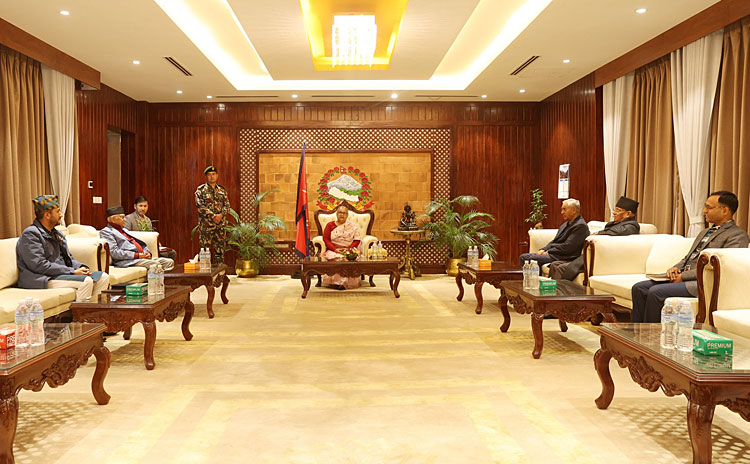
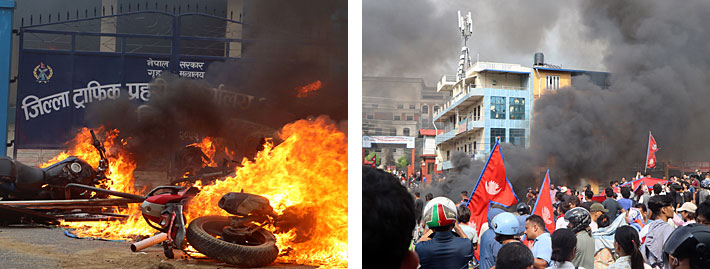
American and Chinese interests coalesce in Bangladesh for undermining India's rise. The same is also the case in Nepal but the difference is that in Nepal the US also wants to curb Chinese influence, to whatever extent possible. But America's overall focus in foaming unrest in Nepal through Gen-Z is to destabilise India. In addition to the covert machinations of the CIA, America's overt agencies involved in regime changes around the world comprise USAID, National Endowment for Democracy (NED) and International Republican Institute (IRI). Leaked files have revealed that the US funded the Gen-Z shadow army of Nepalese youth in the run-up to a violent coup, controlled by a leader chosen through an informal social media poll. America's NED spent hundreds of thousands of dollars to school scores of Nepalese youths in strategies and skills prior to the mob violence that overthrew the government of Nepal in September 2025.
Leaked files have revealed that the US funded the Gen-Z shadow army of Nepalese youth in the run-up to a violent coup, controlled by a leader chosen through an informal social media poll.
Elections are scheduled on March 5, 2026. However, former Chief Justice Sushila Karki, presently Prime Minister of the interim government of Nepal has a difficult task at hand. This is because the China-sponsored Maoist insurgency in Nepal ushered the rise of communists and communist regimes in Kathmandu, either exclusively or as part of coalition governments. Another major reason is that most of the politicians, whose deep-seated corruption has led to poverty in the masses, unemployment and mass exodus seeking jobs abroad, remain unpunished. This can also be exploited by the US to reignite the latent but continuing discontent of Gen-Z. One view is that given the state Nepal's polity, a future government in Kathmandu impervious to Chinese and American influences is utopian.
America's NED spent hundreds of thousands of dollars to school scores of Nepalese youths in strategies and skills prior to the mob violence that overthrew the government of Nepal in September 2025.
Both Mao Zhedong and Deng Xiaoping had said "Tibet is the palm of China and Ladakh, Nepal, Sikkim, Bhutan and NEFA are its fingers", and Chinese President Xi Jinping is in the same genre. As Nepal's political centre of gravity shifts, familiar external playbooks are being tested in new ways. With alliances in flux and a younger leadership asserting itself, influence is no longer exercised as quietly or as predictably as before. Over the past decade, Beijing's presence has expanded swiftly into political, infrastructural, economic, and informational spheres. This growing footprint has fuelled debates about a Chinese hand in Nepal's 2026 elections, intensified further by political churn, fragile coalitions, and shifting geopolitical alignments.
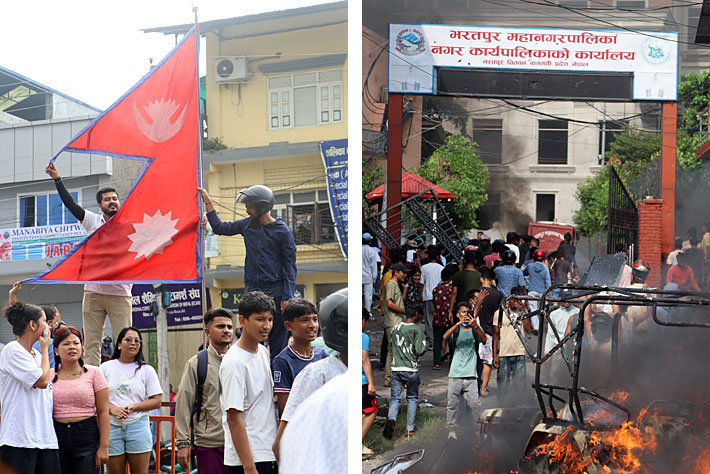
Beijing has markedly intensified its diplomatic engagement with Nepal, underscoring the strategic weight it attaches to the bilateral relationship in the run-up to the 2026 elections. Beijing's immediate response after Prime Minister K.P. Sharma Oli's fall in September 2025 was to re-anchor itself quickly. Ambassador Chen Song intensified political outreach, reaffirming China's "deep commitment" to Nepal's stability and promising "every possible support" for the March 2026 elections. He highlighted progress in BRI projects and stressed China's readiness to expand market access for Nepali agricultural goods. He pointed out that Nepal-focused initiatives have already been written into China's 15th Five-Year Plan, a signal of long-term strategic intention. Moreover, China expressed profound gratitude for Nepal's unwavering commitment to the One-China Policy, highlighting the reassuring observation that even the nascent leadership of Nepal's Gen-Z exhibits no deviation from this established stance.
Over the past decade, Beijing's presence has expanded swiftly into political, infrastructural, economic, and informational spheres.
There is a view that the Gen-Z coup collapsed not only a strategic policy framework, but the elite network Beijing had painstakingly built over a decade. This belief is because China's foreign ministry issued only a brief, cautious statement, hoping that "social order be restored," while the state media framed the turmoil as a symptom of Nepal's structural governance weaknesses, corruption, economic stagnation, and institutional decay, rather than an indictment of the political class China had supported. As also, the merging political elite is characterised by a younger demographic, increased fragmentation, and diminished ideological foundations.
Beijing has markedly intensified its diplomatic engagement with Nepal, underscoring the strategic weight it attaches to the bilateral relationship in the run-up to the 2026 elections.
However, this may be wishful thinking because China plans decades ahead, proof of which can be seen in India's immediate neighbourhood – Pakistan, Nepal, Bangladesh, Myanmar, Sri Lanka. Nepal's major land blockade by India from late 2015 to early 2016, causing severe shortages of fuel, medicine, and essentials, hardly endeared New Delhi to the Nepalese population. China's next-door military and economic prowess have an overbearing influence, which China knows how to exert. China is the only country in the world to have posted a $1 Trillion trade surplus. Therefore, to think that China's (weakening?) leftist hold on Nepal will diminish its hold over Nepal is naïve. The communist parties and politicians anyway are not going to disappear. As Nepal heads toward the 2026 elections, Beijing's involvement in these elections would be a certainty, much of which may not be overt.