




The insightful articles, inspiring narrations and analytical perspectives presented by the Editorial Team, establish an alluring connect with the reader. My compliments and best wishes to SP Guide Publications.
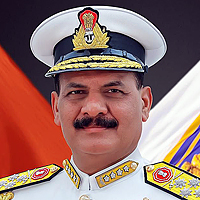
"Over the past 60 years, the growth of SP Guide Publications has mirrored the rising stature of Indian Navy. Its well-researched and informative magazines on Defence and Aerospace sector have served to shape an educated opinion of our military personnel, policy makers and the public alike. I wish SP's Publication team continued success, fair winds and following seas in all future endeavour!"

Since, its inception in 1964, SP Guide Publications has consistently demonstrated commitment to high-quality journalism in the aerospace and defence sectors, earning a well-deserved reputation as Asia's largest media house in this domain. I wish SP Guide Publications continued success in its pursuit of excellence.
Lacking active amphibious aircraft since the 1960s, India faces operational limitations across its vast maritime domains. Now, Indian defence startups like AlphaX Aerospace are developing indigenous hybrid-electric amphibious platforms to address strategic surveillance and logistics needs.
 |
The Author is Former Director General of Information Systems and A Special Forces Veteran, Indian Army |
Amphibious aircraft capable of taking off and landing on both solid runways and water are rare due to high manufacturing costs and strict engineering requirements. China features the largest production capacity today, building indigenous heavy amphibious aircraft for both civil and strategic use. China's heavy amphibious aircraft capabilities are centred on the AVIC AG600 "Kunlong" platform and enhanced variants, like the AG600M, officially recognised as the world's largest and heaviest amphibious aircraft currently in production.
Specifications and capacity of China's AG600M include: 60 MT maximum take-off weight; 4,500-km flight range without mid-air refuelling; 12-hours continuous flight endurance; can scoop 12 MT water in 20 seconds; up to 50 people can be rescued/transported in single mission; 38.9 metres long with wingspan of 38.8 metre; can take off/land in choppy water with wave heights up to 2 metres; sustained steady level flight 30-50 metres above treetops or sea surface for precision drops.
Because India currently does not operate any active amphibious aircraft, the Indian Military uses a combination of other assets
Japan's advanced ShinMaywa US-2 is used for long-range air-to-sea search, rescue, and maritime patrols. Russia deploys the jet-powered Beriev Be-200 Altair, primarily used for maritime surveillance and heavy-payload aerial firefighting. Canada's DHC-6 Twin Otter (often fitted with amphibious floats) and the Canadair CL-415 'Super Scooper' firefighting aircraft remain active globally. While the US relies heavily on helicopters/long-range land-based planes, the US military utilises smaller utility floatplanes in specialised branches and is actively exploring adding larger foreign platforms to its Pacific operations.

India's primary requirement for amphibious aircraft stems from its vast maritime geography and expanding responsibility as a "first responder" in the Indian Ocean Region (IOR). Moreover, the Andaman and Nicobar Islands and the Lakshadweep archipelago located up to 1,300-km away from mainland, require rapid reinforcement, medical evacuation capability, and logistics pipelines where standard land runways do not exist. Also, monitoring foreign naval incursions (like Chinese submarines) near crucial oceanic chokepoints like the Straits of Malacca demands long-endurance platforms that can land on choppy waters to deploy sonar or conduct inspections. In addition is the faster response for Search and Rescue (SAR) operations following cyclones, shipwrecks, or merchant vessel emergencies across international shipping lanes.
Official inter-governmental negotiations for the modern ShinMaywa US-2 amphibious aircraft were shelved in 2021. primarily due to Indian defence budget limitations and offset policy disagreements
Because India currently does not operate any active amphibious aircraft (the last light transport Short Sealand amphibians were phased out in the 1960s), the Indian Military uses a combination of other assets:
In 1997, Japan showcased its ShinMaywa US-1A aircraft (predecessor to the modern US-2). To Indian Navy Chief Admiral Vishnu Bhagwat, visiting Japan - first Indian Service Chief officially invited to visit the Japan. Following the visit, Japan unofficially offered to station two US-1A aircraft in the Andaman and Nicobar Islands free of cost to be jointly operated for sea surveillance. However, due to bureaucratic inertia and rigid diplomatic postures, India did not formally respond to the proposal. Official inter-governmental negotiations for the modern ShinMaywa US-2 amphibious aircraft began in 2011, marking a massive paradigm shift in Japan's export policies. In 2011-2013, Japan's Cabinet issued special waivers for the deal and a Joint Working Group was also established.
In 2014-2016, Prime Ministers Narendra Modi and Japanese Prime Minister Shinzo Abe fast-tracked the deal for 12 aircraft valued at roughly $1.6 billion. To seal the agreement, Japan offered a steep price concession, dropping the cost per aircraft from $133 million to roughly $113 million. In 2018, discussions expanded to include 2-4 planes bought off-the-shelf and remaining units license assembled under 'Make-in-India'. ShinMaywa signed a Memorandum of Understanding (MoU) with India's Mahindra Group to set up domestic assembly and MRO (Maintenance, Repair, and Overhaul) hubs. However, the deal was shelved in 2021. primarily due to Indian defence budget limitations and offset policy disagreements. The aircraft remains a unique operational requirement for India but commercial finalisation remains stalled.
Bengaluru-based defence and aviation startup 'AlphaX Aerospace' is developing India's first amphibious hybrid aircraft
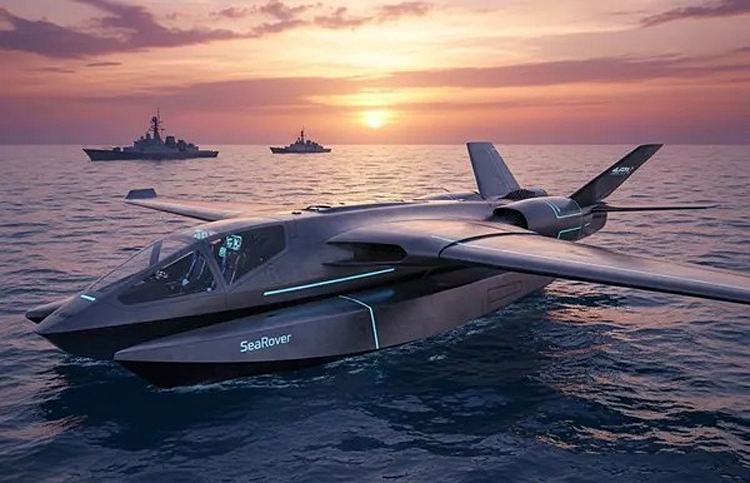
As covered in these columns earlier, Bengaluru-based defence and aviation startup 'AlphaX Aerospace' is developing India's first amphibious hybrid aircraft, according to news reports of August 29, 2026. Named 'Sea Rover', this amphibious aircraft is a pioneering platform designed to operate seamlessly on land, air, and water. This marks a significant leap in indigenous aerospace innovation, combining hybrid propulsion with amphibious versatility. Sea Rover is being positioned as a breakthrough in India's aerospace sector. It is designed to function as a multi-role aircraft capable of taking off and landing on conventional runways, water bodies, and short strips, making it highly adaptable for both civilian and defence missions.
AlphaX Aerospace is incubated under the AIC Crescent Innovation Council with support from NITI Aayog's Atal Innovation Mission. The company's focus on indigenous manufacturing and hybrid-electric propulsion aligns with India's broader push for self-reliance in aerospace and defence. Founded in 2025, AlphaX Aerospace has already attracted attention for its SkyRover electric VTOL programme.
The Sea Rover builds upon this foundation, incorporating proprietary technologies such as AeroCore for modular airframe design, GlideCore for vibration-free cabin comfort, and FlightCore for intelligent flight control and safety. These systems are expected to be adapted for amphibious operations, ensuring stability during water landings and take-offs. The hybrid propulsion system of Sea Rover integrates electric and conventional engines, ensuring extended range, reduced emissions, and operational flexibility.
The hybrid propulsion system of Sea Rover integrates electric and conventional engines, ensuring extended range, reduced emissions, and operational flexibility
Sea Rover is being developed with a projected range of approximately 700–800 km and a cruise speed of 300–350 km/h. Its amphibious capability will allow operations in coastal regions, island territories, and disaster-hit areas where conventional aircraft cannot function. This makes it suitable for roles such as maritime patrol, search and rescue, humanitarian relief, and regional connectivity. The aircraft's capacity is expected to be in the 6–12 passenger range, similar to the SkyRover series, but optimised for amphibious missions. The Sea Rover is also being designed to carry specialised payloads, including surveillance equipment, medical supplies, and defence systems.
Its hybrid propulsion will reduce acoustic signatures, enhancing stealth in sensitive operations. The Sea Rover project reflects the growing role of private-sector innovation in complementing state-backed defence programmes. The Sea Rover's hybrid-electric approach could place India at the forefront of sustainable amphibious aviation, offering a unique combination of versatility and eco-conscious design. The aircraft is currently at the concept stage, with AlphaX exploring partnerships for prototyping and certification. If successful, the Sea Rover could redefine regional air mobility and maritime operations, offering India a strategic edge in both civilian and defence applications. The Sea Rover should also help operations to secure the strategic Sir Creek where Pakistan has significantly militarised the region (https://www.spslandforces.com/experts-speak/?id=1403&h=Securing-Sir-Creek) by deploying six dedicated "Creek Battalions" heavily equipped for infantry and amphibious combat. These forces are backed by Pakistan Navy coastal defence boats, marine assault craft, radars, and air defence systems to secure the river channels, and where India is still issuing request for proposal (RFP) for hovercrafts.
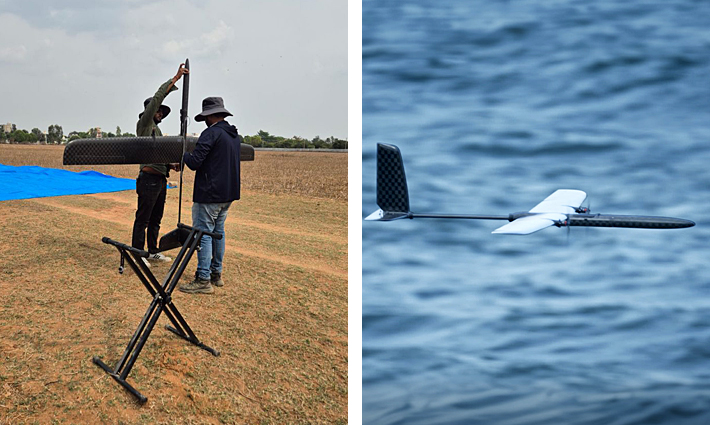
Interestingly, Bengaluru-based Aerospace startup 'Alteon' has flight tested its aircraft flying autonomously within a metre of the ocean's surface in early-August 2026. Alteon's next phase of testing will focus on harvesting enough energy from wind that the aircraft can sustain flight entirely without propulsion, comparable to how an albatross glides on wind currents alone; aimed at eventually deploying a fleet of such aircraft over the ocean and stay up for months without landing.