




The insightful articles, inspiring narrations and analytical perspectives presented by the Editorial Team, establish an alluring connect with the reader. My compliments and best wishes to SP Guide Publications.
"Over the past 60 years, the growth of SP Guide Publications has mirrored the rising stature of Indian Navy. Its well-researched and informative magazines on Defence and Aerospace sector have served to shape an educated opinion of our military personnel, policy makers and the public alike. I wish SP's Publication team continued success, fair winds and following seas in all future endeavour!"

Since, its inception in 1964, SP Guide Publications has consistently demonstrated commitment to high-quality journalism in the aerospace and defence sectors, earning a well-deserved reputation as Asia's largest media house in this domain. I wish SP Guide Publications continued success in its pursuit of excellence.
More than six decades after its revolution, Cuba remains a symbol of resistance, social welfare and political independence despite sustained economic sanctions and repeated attempts at regime change
 |
The Author is former Chief of Staff of a frontline Corps in the North East and a former helicopter pilot. He earlier headed the China & neighbourhood desk at the Defence Intelligence Agency. He retired in July 2020 and held the appointment of Addl DG Information Systems at Army HQ. |
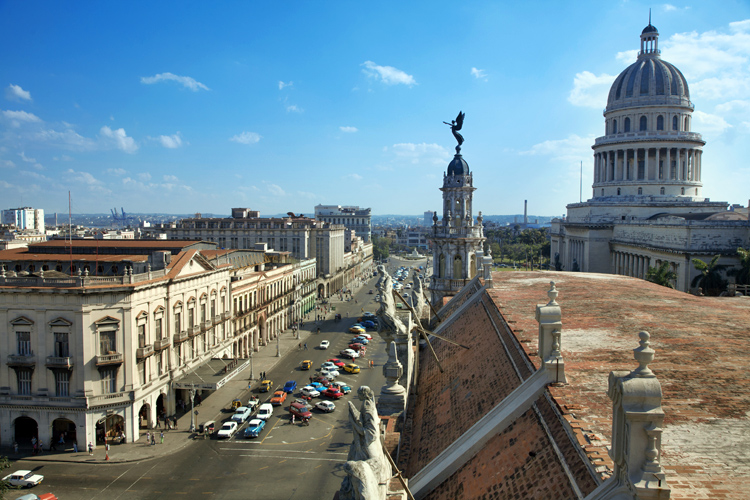
Cuba, a Caribbean island nation, approximately 15,000 kms from India, is best remembered by those of us in our sixties or older for the famous bear hug incident at the March 1983 Non-Aligned Movement (NAM) Summit in New Delhi. Bear hugs were rare in international diplomacy then. But much earlier than this headline grabbing event of 1983, Argentine-born charismatic Cuban revolutionary Ernesto "Che" Guevara had arrived in India on June 30, 1959, just six months after the triumph of the Cuban Revolution. Both countries established diplomatic relationship thereafter.
Fidel Castro's hug was unexpected and surprised Gandhi, but it quickly turned into an enduring symbol of the NAM's commitment to non-aligned nations and their solidarity against the superpowers
Fidel Castro, the Cuban revolutionary leader, embraced Indira Gandhi, then the Prime Minister of India, after she had extended her arm to receive the gavel from Castro, who was passing the chairmanship of the NAM to her. The hug was unexpected and surprised Gandhi, but it quickly turned into an enduring symbol of the NAM's commitment to non-aligned nations and their solidarity against the superpowers.
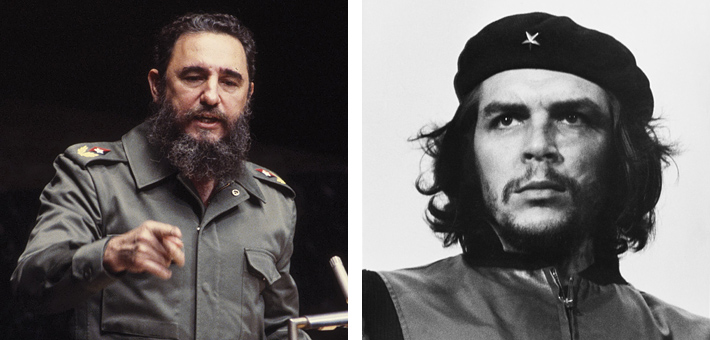
Indira Gandhi was shot dead by her own bodyguards a year later in October 1984. The NAM movement born in an era of ideological confrontation as a collective response of newly decolonised nations to the rigid bipolarity of the Cold War largely lost its relevance after the fall of the Berlin Wall in 1989 and the disintegration of the Soviet Union in 1991. But Castro, his surname originating from the Latin word "castrum," meaning fortress or castle, outlasted all these seismic events and continued to lead Cuba as a communist holdout till he stepped aside in 2008 due to poor health. He died in 2016.
Ten years down the line, Cuba's economy is in free fall, its electric grid is failing, millions of its citizens have left and the Cuban government is facing off against perhaps its most menacing foe: President Donald Trump. The US has closed off Cuba's access to oil shipments, and helped cripple its vital tourism industry. Cuba is facing a growing humanitarian crisis with food scarce, schools closed, hospitals reducing service, trash piling up, fights unable to take off, and near total darkness at night. After the US military kidnapped the Venezuelan leader Nicolas Maduro in an early morning raid on January 3, 2026, Trump halted Venezuelan oil to Cuba. Venezuela had long kept Cuba afloat with 35,000 barrels of oil a day in exchange for medical services by Cuban doctors.
Less than a hundred miles off the coast of the US, Cuba has resisted consistent American attempt to subvert its social compact
The US is using the regulation toolkit of economic sanctions, support for preferred leaders and governments, removal of democratically elected presidents, and direct military interventions for effecting regime change under the fig leafs of economic transformation and democracy. Look at the American track record in promoting democracy. Rogue militias of all hues are routinely armed, funded and assisted by the CIA through its over 800 military bases across the world, ostensibly to advance freedom and democracy. The Military Industrial Complex (MIC) and the CIA led 'Deep State' of the US are past masters of 'Regime Change' operations having executed at least 70 documented regime-change operations between 1947 and 1989 (read Covert Regime Change by Lindsey O'Rourke, 2018) and dozens of further regime-change operations (coups, wars, colour revolutions), both overt and covert. Venezuela is the latest, executed through the brazen kidnapping of its Head of the State on January 3, 2026. But their mission in Iran has spectacularly failed. If anything, the contours of the Iran war suggests, that the world may be about to witness the most consequential regime change with the US being ejected from its perch as the sole superpower and hegemon since WW II.
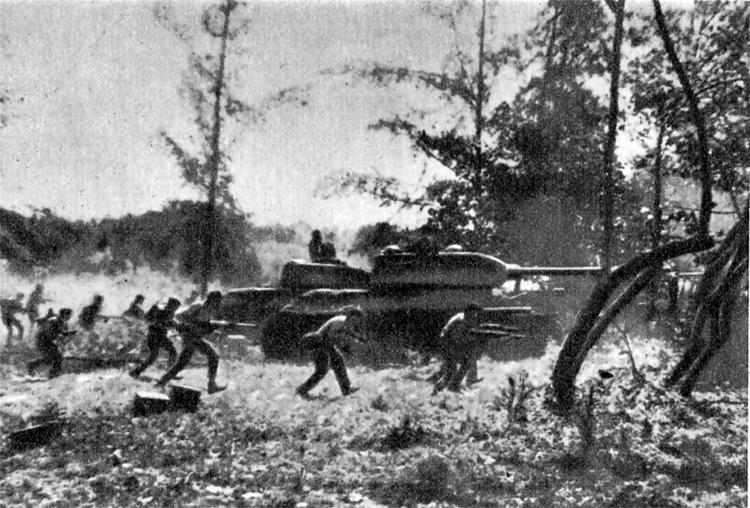
Past predictions of the fall of the Cuban government have been wrong. Washington pursued covert and overt efforts to remove Castro from power, most notably in the Bay of Pigs invasion in 1961. The US government sent a brigade of more than 1,500 Cuban exiles but the mission failed miserably and many of the exiles were captured and imprisoned. The CIA also conducted extensive clandestine operations, including hundreds of assassination plots targeting Castro. Cuba did not collapse even in the 1990s during the crisis known as the "Special Period" after the fall of the Soviet Union.
Less than a hundred miles off the coast of the US, Cuba has resisted consistent American attempt to subvert its social compact. People in Cuba today enjoy longer life expectancy (79 years) than do people in the USA (78 years) or India (70 years). Cuba also has a superior childhood mortality rate (the number of deaths upto age 5 per 1,000 live births per year) of six, compared to eight in the USA and a depressing 28 in India. Cuba has a better doctor-to-patient ratio than that of USA or Western Europe with a doctor for every 150 people compared to one for every 1,456 people in India.
Cuba has a better doctor-to-patient ratio than that of USA or Western Europe with a doctor for every 150 people
Since 1963, more than 6,00,000 Cuban health workers have provided medical services in more than 160 countries. Around 30,000 Cuban doctors are active in 67 countries. The Cuban biotech sector does not claim patent rights in stark contrast to the approach taken by the for-profit multinational pharmaceutical companies, which routinely seek to secure monopoly rights over drugs they have developed or purchased the copyright rights to. Contrast this with the conduct of American pharma giant Pfizer during the COVID pandemic which had inflated the price per dose up to 15 times the production cost, leading to billions in overpayments, promoted an "unlicensed medicine," and was also guilty of "making a misleading claim." In Pfizer's negotiations with Latin American governments under panic circumstances, it insisted on indemnity against its own negligence, indemnity against adverse effects and delays in deliveries while forcing governments to pledge sovereign assets as collateral to cover future potential legal costs.
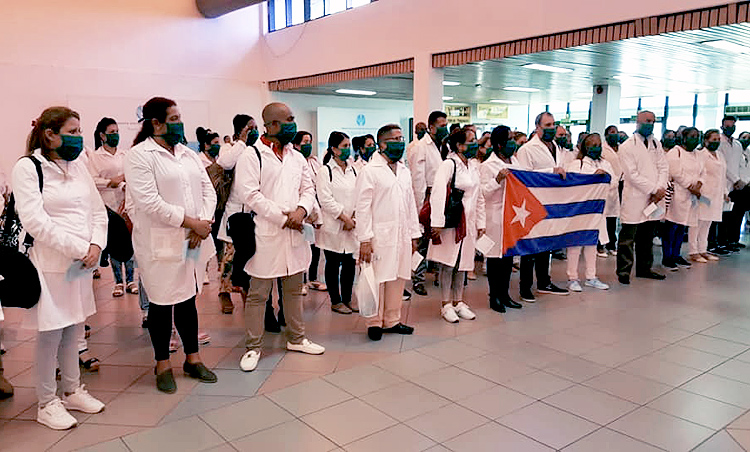
Cuba stands out as an island of hope in this milieu. A clear and present danger to the seeming utopia of free market corporate capitalists, Cuba has become a system that must be crushed to protect the interests of the 'Deep State'. The fear of success of an alternative economic model has been so overwhelming for the "Deep State" that the US entered Vietnam once the French were defeated to prevent a 'Domino' effect. The outcome was more than 58,000 American soldiers dead at the end of a decade of engagement and a humiliating withdrawal in 1974 while the Vietnam united as a country in 1975 and remains a communist nation today with a robust manufacturing and tourism economy.
The Iran war may likely see the demise of the uni-polar world, ushering in a multi-polar geostrategic architecture of fluid alignments and pragmatic partnerships
Cuba's approach to equality has been a central theme since the Revolution, aiming to create an inclusive society where all can contribute to the common good. The search for equality has been a long-standing goal, dating back over a hundred years, and it forms part of an ideal of an independent nation. However, Cuba's economy is heavily impacted by the US embargo, which has lasted over six decades and has significantly affected the country's ability to provide for its citizens.
The Iran war may likely see the demise of the uni-polar world, ushering in a multi-polar geostrategic architecture of fluid alignments and pragmatic partnerships. The era of unilateral sanctions on smaller and weaker nations must give way to a more equitable global order where sovereignty of nations and their choice of governance models must be respected. Castro and Che have been romanticised by generations of youth fired by a desire for revolution, for freedom and change. The Cuba of Castro and Che should endure.