





The insightful articles, inspiring narrations and analytical perspectives presented by the Editorial Team, establish an alluring connect with the reader. My compliments and best wishes to SP Guide Publications.

"Over the past 60 years, the growth of SP Guide Publications has mirrored the rising stature of Indian Navy. Its well-researched and informative magazines on Defence and Aerospace sector have served to shape an educated opinion of our military personnel, policy makers and the public alike. I wish SP's Publication team continued success, fair winds and following seas in all future endeavour!"

Since, its inception in 1964, SP Guide Publications has consistently demonstrated commitment to high-quality journalism in the aerospace and defence sectors, earning a well-deserved reputation as Asia's largest media house in this domain. I wish SP Guide Publications continued success in its pursuit of excellence.
The Indian Navy is accelerating future warfare capabilities reflecting a broader push towards self-reliance, operational endurance and technologically advanced maritime dominance in the Indo-Pacific
 |
The Author is Former Director General of Information Systems and A Special Forces Veteran, Indian Army |
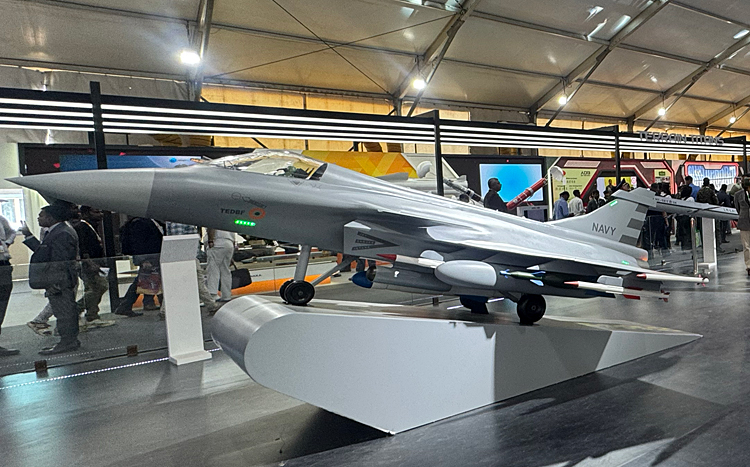
In December 2025, the Indian Navy reiterated its dedication to the Twin Engine Deck Based Fighter (TEDBF) programme. The Chief of Naval Staff Admiral Dinesh K. Tripathi confirmed that the project remains a top priority and is poised for substantial progress in the immediate future.
The TEDBF programme is to develop a 4.5-generation, carrier-based, multirole combat aircraft for the Indian Navy. Designed by the Aeronautical Development Agency (ADA) and manufactured by Hindustan Aeronautics Limited (HAL), the TEDBF is to replace the MiG-29K fleet on the INS Vikramaditya and INS Vikrant aircraft carriers.
The TEDBF will share critical mission systems, sensors, and avionics with the Advanced Medium Combat Aircraft (AMCA) programme, ensuring high-tech capabilities at a reduced development cost; utilising shared infrastructure and technologies, minimising risks and accelerating delivery timelines.
Featuring a delta wing, the TEDBF is likely to be powered by the GE F414 engines – same as Tejas Mk2 and early AMCA variants. The Navy's immediate goal is to obtain clearance from the Cabinet Committee on Security (CCS) following completion of the Programme Definition Review. The CCS approval will release full-scale development funding and officially structure the programme. Thereafter, the Navy plans to collaborate with the same manufacturing consortium being established for the AMCA; expected to be finalised by the ADA by late 2026.
The TEDBF will share critical mission systems, sensors, and avionics with the Advanced Medium Combat Aircraft (AMCA) programme, ensuring high-tech capabilities at a reduced development cost
The TEDBF's maiden flight is expected three years after CCS approval; rollout of first prototype sometime after 2030, following the AMCA rollout in 2028. The trials will focus on carrier compatibility, including ski-jump take-offs and arrested landings—essential for operations from India's STOBAR (Short Take-Off But Arrested Recovery) carriers like INS Vikrant and INS Vikramaditya. The Navy has committed to initial procurement of over 80 TEDBF jets but this number could increase to 140 if the government approves construction of future aircraft carriers - proposed IAC-II and IAC-III.
According to news reports of April 8, 2026, the Indian Navy is exploring the concept of Rearming by Drone (REARM-D) at Sea, which envisions the use of multi rotor drones to reload surface to air missiles (SAMs) into vertical launch system (VLS) cells onboard warships while at sea. The Navy has officially released a problem statement of REARM-D at Sea under the Defence India Start-Up Challenge 14, aiming to tackle the complex task of reloading Vertical Launch System cells at sea without returning to port.
This initiative addresses future naval logistics, aiming to enhance operational endurance and reduce reliance on port facilities for replenishment of critical munitions. The REARM-D concept is centred on the deployment of robust, autonomous drones capable of lifting and precisely manoeuvring heavy missile canisters in challenging maritime conditions. These drones would be engineered to handle the weight and dimensions of SAM reloads, ensuring safe transfer from supply vessels or onboard storage to the vertical launch system cells of frontline warships.
Traditional methods of reloading vertical launch systems are cumbersome, requiring port facilities, cranes, and calm conditions. The REARM-D initiative aims to bypass these limitations, enabling warships to maintain combat readiness even in contested or remote waters. By adopting drone based rearming, the Indian Navy seeks to overcome one of the most complex logistical challenges in modern naval warfare: sustaining missile readiness during extended deployments. The project also highlights increased emphasis on unmanned systems as force multipliers. Multi rotor drones, with their ability to hover, stabilise, and deliver payloads with precision, are well suited for the delicate task of aligning missile canisters with vertical launch cells.
The specifications outlined for this multi rotor drone are: carry payloads exceeding 900 kg to handle missile canisters; more than two hours endurance; employ a hybrid propulsion system with internal combustion engine to withstand strong sea winds; guided precision, hovering steadily to align and lower missiles into designated VLS cells using a winch system.
Indian Navy is exploring the concept of Rearming by Drone (REARM-D) at Sea, which envisions the use of multi rotor drones to reload surface to air missiles (SAMs) into vertical launch system (VLS) cells onboard warships
REARM-D would be a significant leap in integrating unmanned technologies into core naval operations beyond surveillance and reconnaissance. It would demand advances in drone endurance, payload capacity, and stabilisation systems to cope with the dynamic environment of the open sea. It would also require seamless integration with shipboard systems, ensuring that drones can operate safely around radar masts, antennas, and other superstructure elements.
REARM-D would set a precedent for future naval operations, where drones play a pivotal role in sustaining missile armed fleets during prolonged missions. The Navy's pursuit of drone based rearming reflects a strategic recognition that endurance and autonomy are as critical as firepower in modern maritime conflict. REARM-D could significantly enhance India's ability to project power and maintain readiness across the Indo Pacific.
Concurrently, the Indian Navy is embarking on a transformation to fortify its maritime prowess by integrating cutting-edge quantum-secure communication and AI-driven predictive maintenance; to safeguard future warships against evolving cyber threats while boosting operational efficiency.By leveraging these advanced technologies, the Navy aims to ensure that its fleet remains resilient, reliable, and technologically superior in increasingly contested waters.
The implementation of quantum-secure communication addresses the growing vulnerability of traditional encryption methods to future quantum computing capabilities. This move is to create an impenetrable shield around the Navy's data exchanges, ensuring sensitive tactical information and command signals remain confidential and immune to interception or decryption by adversaries.
In addition, the Navy is adopting AI-based predictive maintenance to revolutionise managing its complex machinery instead of relying solely on fixed schedules/ reactive repairs following a failure. AI algorithms will analyse vast streams of sensor data to forecast potential mechanical issues before they manifest. This will significantly reduce downtime, extend lifespan of critical systems, ensuring peak readiness of warships.
This dual-focus strategy aims to create a fleet that is both smarter and more secure, capable of maintaining a constant and formidable presence at sea. The integration of these technologies reflects a broader vision of self-reliance and indigenous technological growth within the Indian defence sector. Ultimately, the fusion of quantum security and AI-driven logistics represents a forward-thinking blueprint for a modern, high-tech maritime force ready to defend national interests with unprecedented digital and mechanical endurance.
Concurrently, the Indian Navy is embarking on a transformation to fortify its maritime prowess by integrating cutting-edge quantum-secure communication and AI-driven predictive maintenance
The Navy is also pursuing an indigenous quantum radar. With the DRDO leading the programme, significant milestones achieved between 2025 and 2026 have focused on quantum magnetometers, which function as an "underwater quantum radar" by identifying minute magnetic disturbances from stealth submarines. The Navy seeks to counter 5G stealth fighters and ultra-silent submarines proliferating in the Indian Ocean.
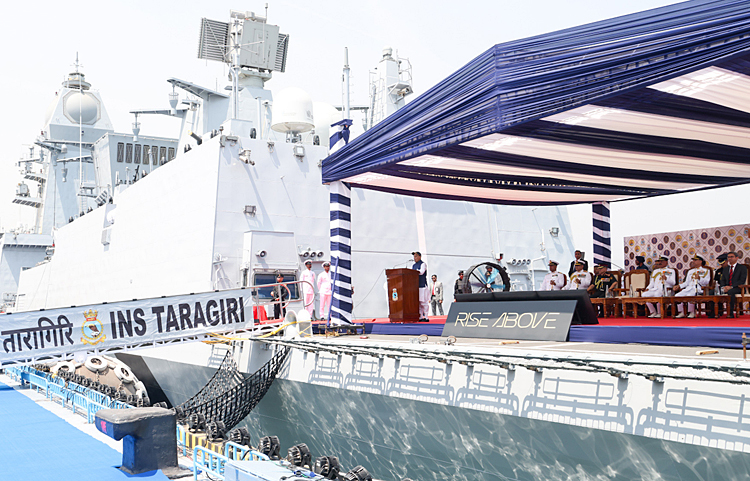
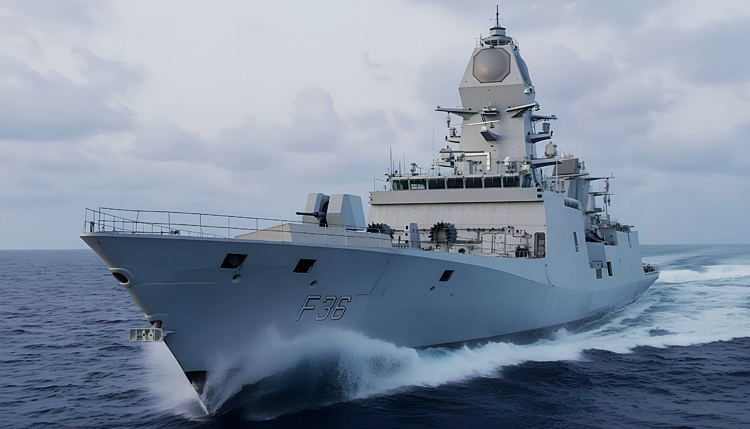
Integration is currently focused on the Nilgiri-class (Project 17A) frigates, such as the recently commissioned INS Taragiri and INS Dunagiri. Although these vessels presently utilise the MF-STAR AESA radar, they feature modular architectures designed for mid-life upgrades.
The upcoming Project 17B is to have permanent indigenous quantum radar. Currently in the design and bidding phase, these "quantum-ready" vessels will include indigenous fire control systems and quantum-enhanced lidar for detecting low-observable drones. They are also expected to incorporate Quantum Key Distribution (QKD) to ensure entirely unhackable fleet communications.
Submarine platforms, including those under Project 75(I) and future nuclear attack submarines, are being prioritised for quantum gravimeters; allowing "ghost" navigation by mapping the ocean floor with extreme precision, without GPS or active sonar pings. Aircraft carriers will deploy quantum atomic clocks to provide precise synchronisation for fleet-wide electronic warfare, with a phased rollout of these technologies expected between 2027 and 2030.