





The insightful articles, inspiring narrations and analytical perspectives presented by the Editorial Team, establish an alluring connect with the reader. My compliments and best wishes to SP Guide Publications.

"Over the past 60 years, the growth of SP Guide Publications has mirrored the rising stature of Indian Navy. Its well-researched and informative magazines on Defence and Aerospace sector have served to shape an educated opinion of our military personnel, policy makers and the public alike. I wish SP's Publication team continued success, fair winds and following seas in all future endeavour!"

Since, its inception in 1964, SP Guide Publications has consistently demonstrated commitment to high-quality journalism in the aerospace and defence sectors, earning a well-deserved reputation as Asia's largest media house in this domain. I wish SP Guide Publications continued success in its pursuit of excellence.
India's induction of indigenous autonomous weaponised fast interceptor crafts marks a major leap in naval modernisation and maritime security. These unmanned vessels enhance coastal defence, swarm warfare capability, and counter-terror operations, strengthening India's self-reliance in advanced defence technologies.
 |
The Author is Former Director General of Information Systems and A Special Forces Veteran, Indian Army |
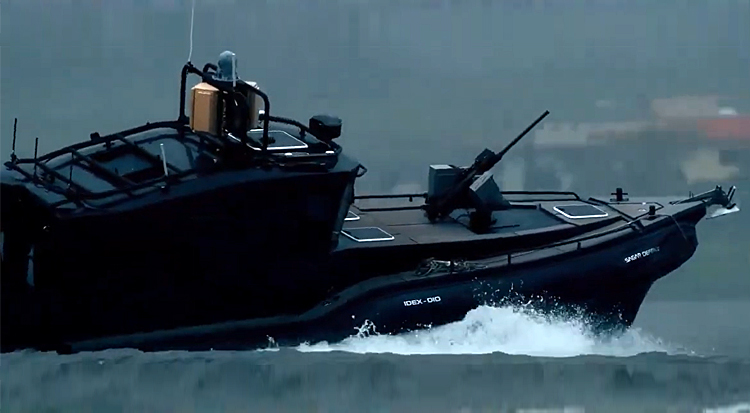
According to reports of January 31, 2026, the Indian Navy has begun receiving the delivery of the first batch of the country's first-of-its-kind autonomous weaponised fast interceptor crafts (FICs) from Pune-based Sagar Defence Engineering. This will help the Navy in securing India's maritime boundaries. As well as giving a big boost to the Navy's special missions along the Indian coast. With the induction of these unmanned weaponised crafts in the Navy, India will join the league of countries that possesses the technology to develop weaponised swarm (vessel) capability. These vessels are designed to combat terrorism, conduct coastal patrols, and engage in "swarm" tactics with minimal personnel risk.
With the induction of these unmanned weaponised crafts in the Navy, India will join the league of countries that possesses the technology to develop weaponised swarm (vessel) capability
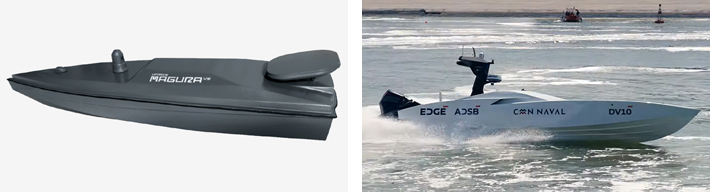
Based on recent developments, several countries are developing or have deployed FICs for surveillance, anti-terrorism, anti-piracy, and combat roles. Prominent countries using FICs include the following:
Designed, developed and manufactured entirely in India, the unmanned FIC stands as a testament to the nation's vision of self-reliance in defence technologies under the iDEX–DIO framework
Designed, developed and manufactured entirely in India, the unmanned FIC stands as a testament to the nation's vision of self-reliance in defence technologies under the iDEX–DIO framework. The Navy had placed orders for 12 such weaponised boat swarms after signing a deal with Sagar Defence Engineering on January 5 in 2022. The first batch of two new FICs from Sagar Defence's Pune factory was dispatched to the Indian Navy on January 30, 2026 for deployment along the western coast. Till now, the Navy has been dependent on Israel-made USVs and that too for only mine counter-measure purpose.
The unmanned interceptor craft is fitted with a 12.7mm gun for close-range firepower and also equipped with the capability to deploy short-range missiles and loitering munitions. Multiple fast interceptor crafts can be controlled from a single control station, multiplying force projection while reducing risk to human operators. One of the most striking features of this interceptor craft is its ability to operate in a GPS-denied environment. Advanced navigation systems allow the craft to function reliably even under electronic warfare conditions, ensuring mission continuity where conventional platforms may falter. With an endurance exceeding two days at sea, the vessel offers sustained operational presence, enhancing maritime domain awareness.
One of the most striking features of this interceptor craft is its ability to operate in a GPS-denied environment
This unmanned FIC is also capable of carrying over 14 personnel, when required, for special missions, adding to its operational flexibility for coastal operations, rapid insertion or evacuation roles. This layered weapon architecture enables the craft to respond decisively to a wide spectrum of threats, from asymmetric maritime challenges to high-intensity combat scenarios. Its operational range of over 400 nautical miles or approximately 800 km, positions it as a formidable asset for extended patrols and rapid response operations.
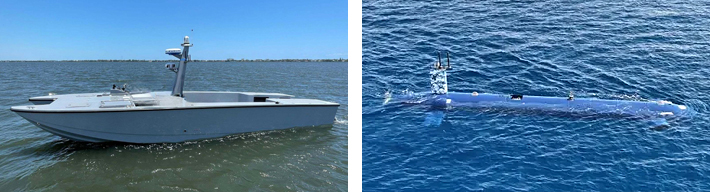
These vessels can function in remote-controlled or fully autonomous modes at high speeds and carrying weapons – machine guns and drones
These vessels can function in remote-controlled or fully autonomous modes at high speeds and carrying weapons – machine guns and drones. This technological capability is aligned with emerging global trends in network-centric and autonomous warfare, placing India firmly at the forefront of naval innovation. These indigenous FICs will be a big boost in countering terror-related threats on the waters, particularly from countries like Pakistan.